

Water for Your Skin – The Complete Guide to Toners
Water for Your Skin: The Complete Guide to Toners
Your body is approximately sixty percent water. Every cell, every tissue, every function depends on adequate hydration. Water is how nutrients move through your system. How waste products are removed. How your organs communicate. How your metabolism functions. Without water, you die. It’s that fundamental.
Your skin reflects this same dependence. The living layers of your skin – the epidermis and dermis where cellular activity occurs – are approximately seventy percent water. Not surface moisture. Not dampness you can feel. Water at the cellular level, within and between your cells, creating the medium in which every skin process takes place.
Enzyme activity requires water. Nutrient transport happens through water. Cellular communication depends on water. The synthesis of proteins, lipids, and all the structural components your skin constantly produces requires adequate hydration. Cell division – the process that creates new skin cells to replace old ones – only occurs properly when cells have sufficient water.
This is structural water. Functional water. Water as essential to skin health as it is to the health of any other organ in your body.
But skin loses water constantly.
How Skin Loses Water
Through a process called transepidermal water loss – TEWL in skincare literature – moisture from your living dermal layers moves upward through your epidermis and evaporates from your skin’s surface into the surrounding air. This happens continuously, unavoidably, as long as there’s a difference between the humidity level in your skin and the humidity level in the air around you.
When environmental humidity is low – common in winter with cold outdoor air and heated indoor spaces, but also in summer with air conditioning, in dry climates year-round, in offices and airplanes and anywhere with controlled climate – the gradient between your skin’s moisture and the air’s moisture is steep. Water moves rapidly from areas of higher concentration (your skin) to areas of lower concentration (dry air). Your skin loses water faster than it can produce it.
Your barrier works to slow this loss. The stratum corneum – that outermost layer of flattened dead cells – acts as a protective seal against water evaporation. The lipids between those cells create a waterproof matrix. Natural moisturizing factors within your skin help bind and hold water. All of this is your skin’s adaptive response to prevent excessive water loss.
But even with these protections, you lose water constantly. Studies measuring TEWL show that normal healthy skin loses between 200-400 milliliters of water per day just through passive evaporation. When your barrier is compromised, when humidity is especially low, when you’re in challenging environmental conditions, that loss increases significantly.
You need to replace this water. Drinking water helps – adequate systemic hydration supports skin hydration. But drinking alone isn’t enough because water delivered through your bloodstream to your dermis still has to make it through all your skin layers while dealing with continuous evaporative loss from the surface.
This is where topical hydration becomes essential. Delivering water directly to your skin’s surface, in a form that can penetrate and be retained, addresses dehydration at the source.
 Why Toner: Water Your Skin Can Use
You can splash plain water on your face, but it evaporates within seconds. Your skin doesn’t absorb it meaningfully. Plain water on the surface doesn’t increase cellular hydration because it doesn’t penetrate beyond the very outermost dead cell layer before evaporating.
Toner is different. Toner is water prepared with compounds that help it penetrate, help your skin hold onto it, help it actually increase hydration at the cellular level where you need it.
Hydrosols form the base of quality toners. This is the water that remains after steam distillation of plants – when you distill roses or lavender or neroli for essential oil, the water that comes through the still carries water-soluble compounds from those plants. Tannins, organic acids, polyphenols, various plant constituents that don’t come across in the oil but are present in the water. These compounds give hydrosols their beneficial properties and also help them penetrate skin more effectively than plain water.
Aloe vera – specifically fresh whole-leaf aloe, not the processed gel in bottles – contains polysaccharides that have remarkable water-binding capacity. Acemannan and other aloe polysaccharides help your skin hold onto the water being delivered, increasing moisture retention after application.
Humectants in some formulations – compounds that attract and bind water molecules – help draw moisture into your skin and hold it there.
Together these create a preparation that your skin can actually use. Water that penetrates rather than evaporating immediately. Water that your skin retains rather than losing within minutes. Water that increases cellular hydration measurably, creating the foundation for all your skin’s processes to function better.
Water Comes First
In a layered skincare routine – the approach where you build results through multiple products applied in specific sequence – water comes first. Not because of tradition or ritual. Water comes first because of basic biology.
Your skin needs adequate water to function. Period. Before any other consideration – before treatment ingredients, before protective layers, before anything else – your skin needs water.
When you apply serum or treatment products to properly hydrated skin, they penetrate more effectively. The active ingredients can move through tissue that’s adequately hydrated more easily than through dehydrated tissue. Humectants in serums work better when there’s already moisture present for them to bind to.
When you apply oil to well-hydrated skin, it absorbs readily and creates an effective seal. The same oil applied to dehydrated skin often sits on the surface feeling heavy because there’s no moisture underneath for it to work with.
This isn’t philosophy. It’s practical functionality. Water first creates the conditions for everything else to work properly.
The Four Toners: Different Waters for Different Needs
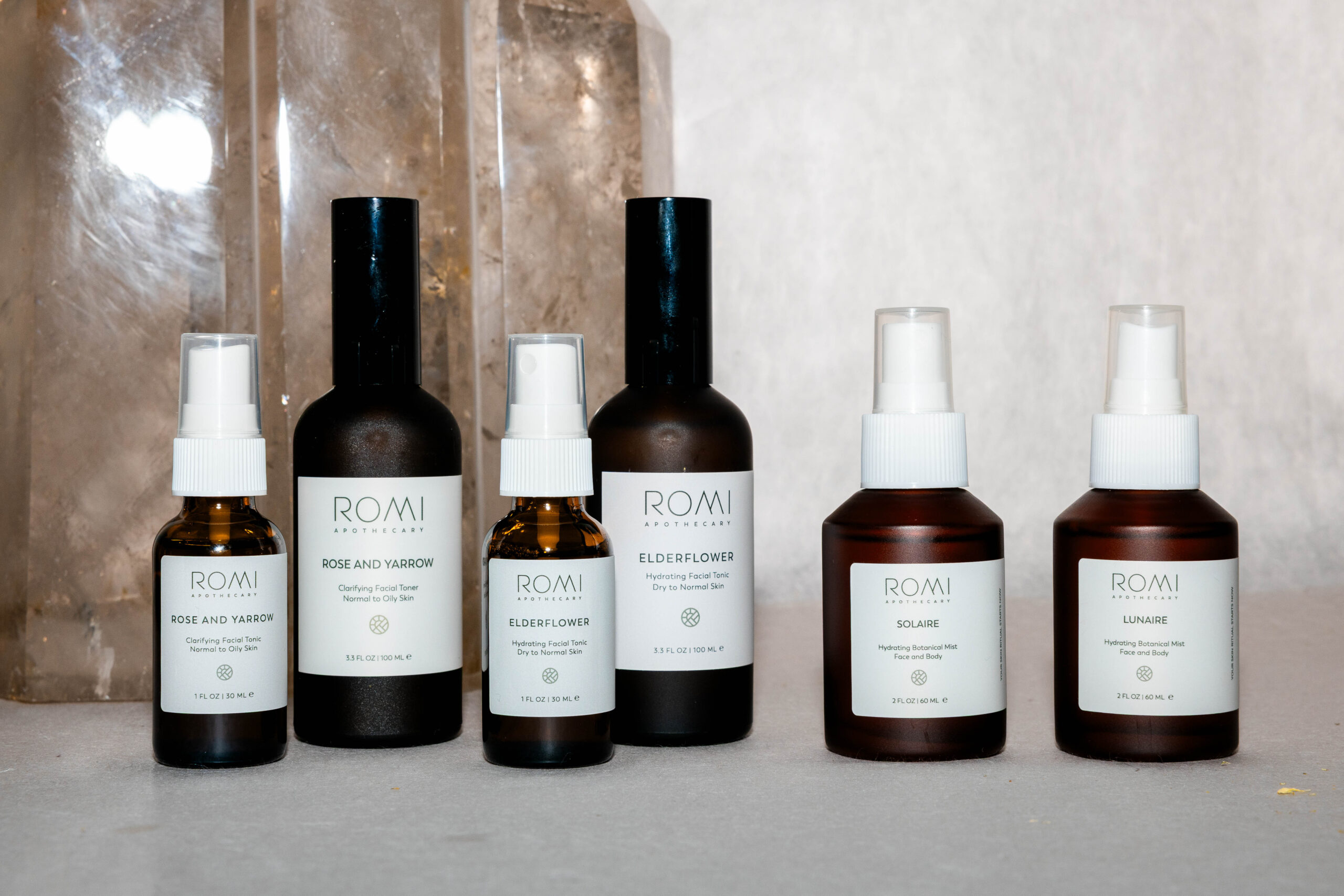
We offer four toners. Each provides water, but in different ways, serving different skin needs and preferences.
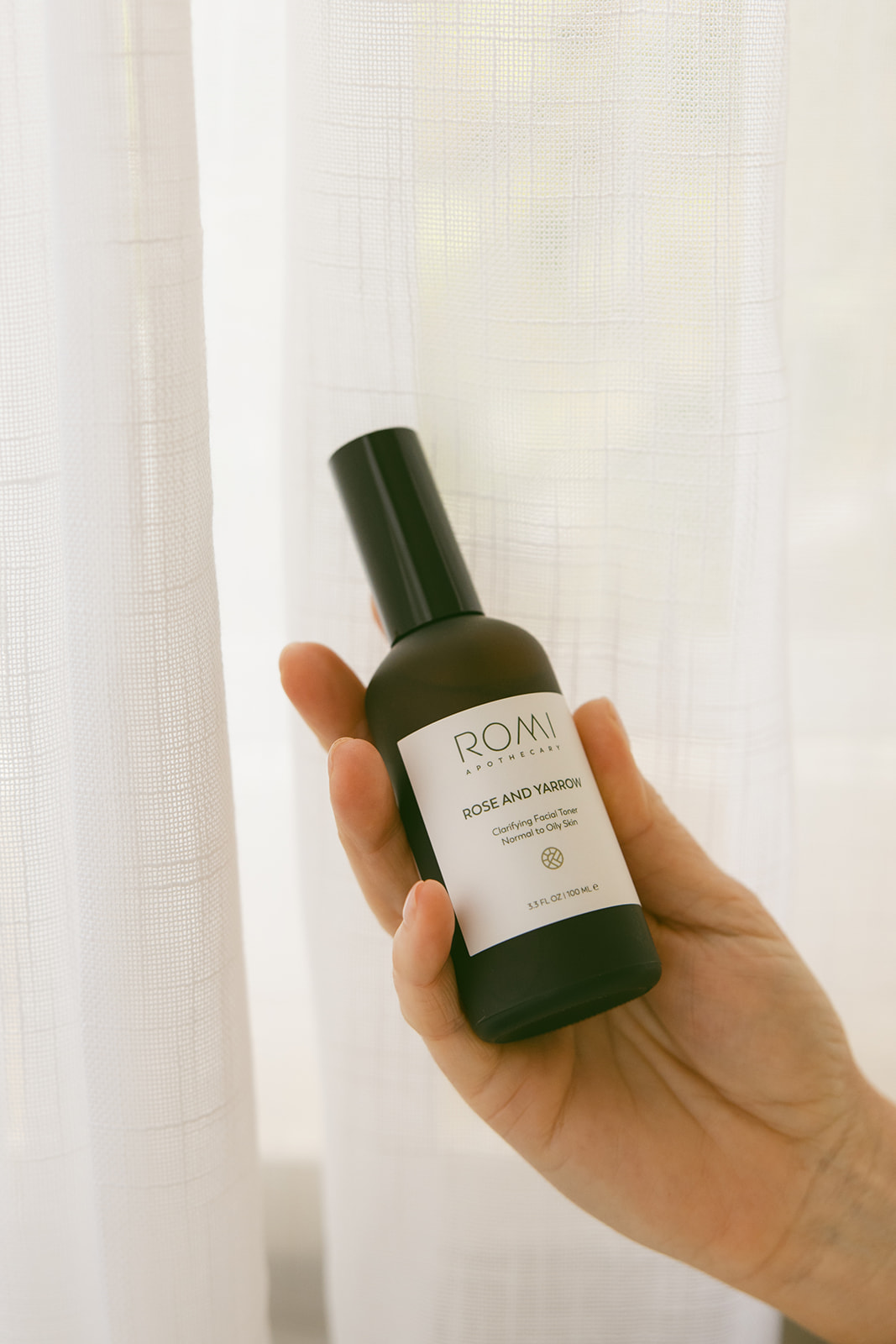
Rose and Yarrow Toner: Balancing Water with Gentle Refinement
This is our bestseller, the toner most people discover first and many continue using for years.
The base is rose hydrosol and yarrow hydrosol – both plants with long use in skincare, both offering gentle astringent properties alongside their water-delivery function.
Rose hydrosol comes from steam-distilling rose petals for rose otto essential oil. The water that remains carries water-soluble rose compounds including mild tannins that provide subtle astringency. Rose has been used in skincare across cultures for centuries because it genuinely helps skin – gentle enough for sensitive types while still offering refinement.
Yarrow hydrosol adds its own toning properties. Yarrow is valued in various herbal traditions for helping skin find balance – addressing both excess oiliness and excess dryness by supporting healthy function rather than forcing skin in one direction or another.
Fresh whole-leaf aloe vera gel provides water-binding polysaccharides that help your skin retain the hydration this toner delivers.
A small amount of alcohol-free witch hazel adds additional mild astringency without harshness.
Together these create water that both hydrates and refines. The astringent properties are subtle – you might notice a slight tightening sensation, a slight refinement of pore appearance – but the primary function is still hydration. This is water that’s appropriate for skin prone to oiliness, for skin with visible pores, for anyone who wants gentle toning alongside moisture delivery.
For skin that tends to produce excess oil, Rose and Yarrow helps address a common pattern: oily skin is often actually dehydrated, producing extra oil to compensate for lack of water. Providing adequate water while gently toning helps skin regulate its own oil production more effectively.
For normal skin that just wants balanced function, Rose and Yarrow provides exactly this – neither too much nor too little of anything, just clean effective hydration with subtle refinement.
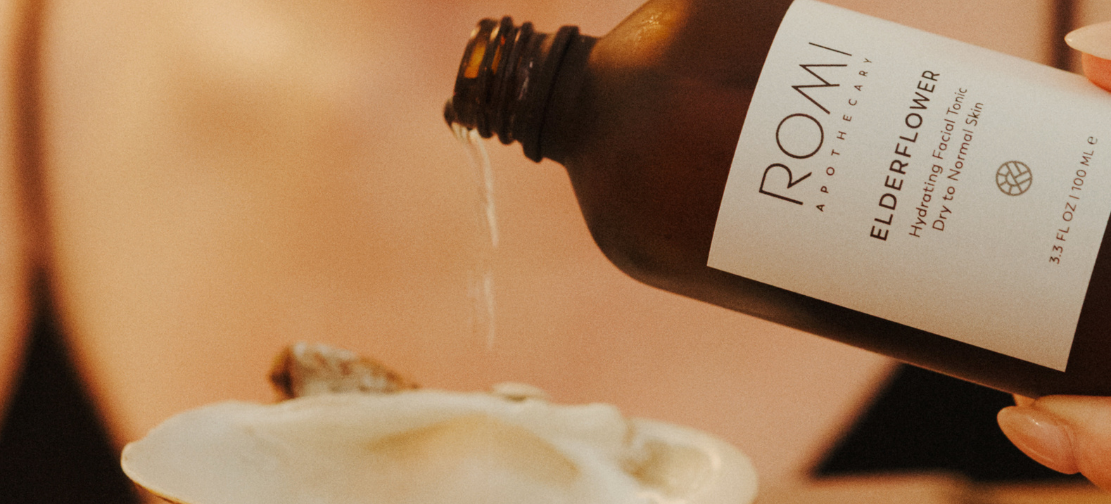
Elderflower Toner: Pure Hydrating Water
Where Rose and Yarrow offers hydration with gentle toning, Elderflower offers hydration without any astringency whatsoever – pure water for skin that needs moisture and gentleness.
The base is neroli hydrosol (from orange blossoms) and elderflower hydrosol. Neroli has traditional use for dry skin, for mature skin, for any skin that needs nourishment. Elderflower appears in various traditions as gentle support appropriate even for delicate skin.
Lemon balm adds calming properties – traditionally used for sensitive or reactive skin where gentleness is the priority.
Fresh aloe provides the same water-retention support as in Rose and Yarrow.
The result is water you can layer generously without any concern about over-toning. Some people apply Elderflower multiple times in succession – three, four, five layers – each one sinking in completely, their skin clearly communicating it wants more water and can absorb more water.
For genuinely dry skin – the kind that feels tight after cleansing, that shows fine lines from dehydration, that soaks up any moisture offered – Elderflower provides exactly what’s needed. Pure hydration. No astringency to potentially irritate or dry further. Just water, delivered effectively.
For sensitive skin that responds poorly to anything with toning properties, Elderflower offers moisture without any compounds that might trigger reactivity.
For anyone who wants to practice generous water layering – building hydration through multiple light applications – Elderflower supports this perfectly. You can apply it until your skin genuinely feels saturated with moisture, which for many people is far more hydration than they’ve ever given their skin topically.
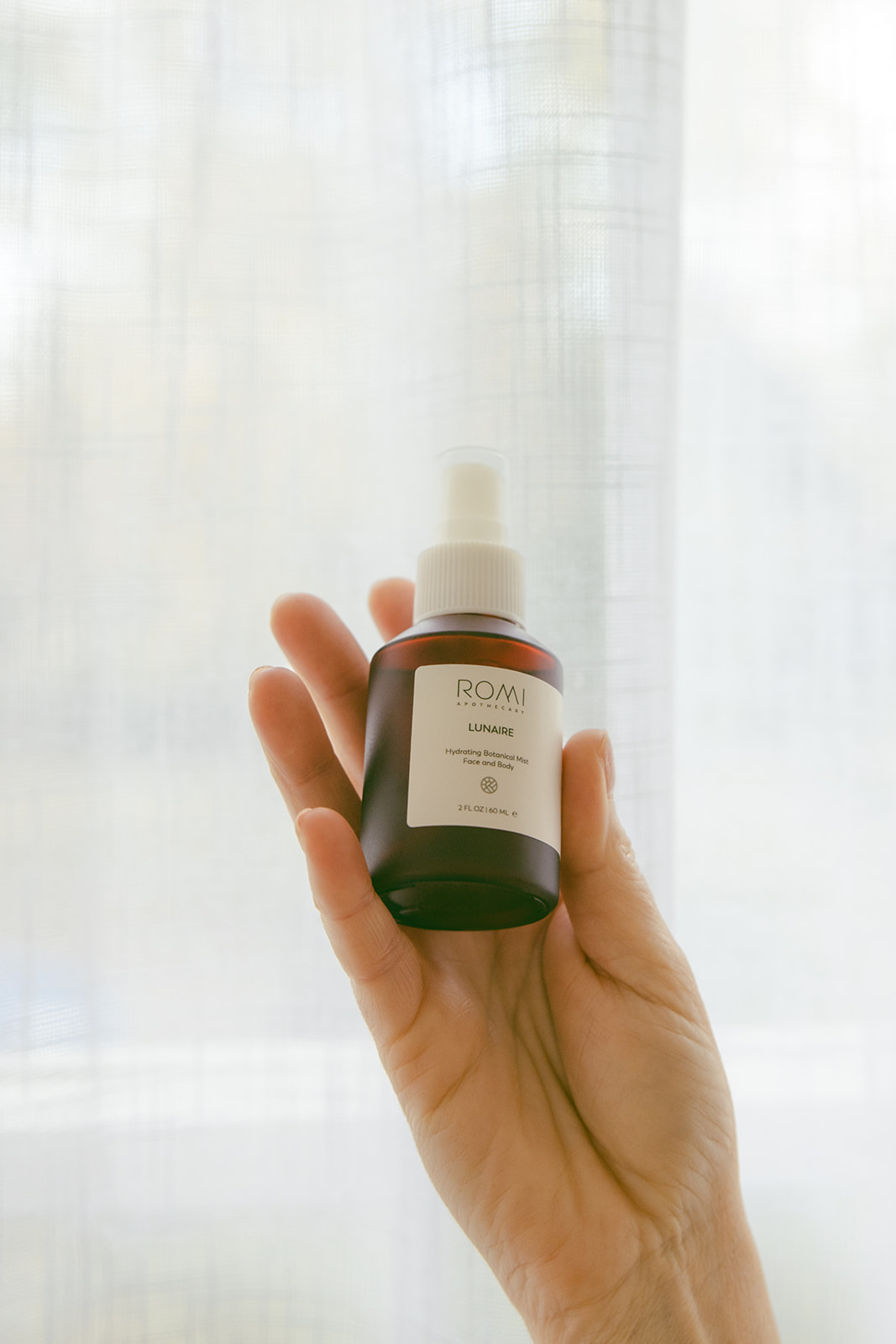 Lunaire Hydrating Mist: Grounding Water for Calm and Repair
Lunaire offers water formulated for grounding, calming, and the repair work your skin does during rest.
The base is copper-distilled aloe vera. Rather than simple juicing of fresh aloe, this involves processing whole aloe leaves through copper distillation, which extracts different compounds and creates a preparation that’s both hydrating and energetically grounding in ways fresh aloe juice isn’t.
Turmeric root – the same turmeric used in cooking – is copper-distilled to extract water-soluble compounds. Turmeric has extensive traditional use in skincare across many cultures for supporting skin health. The copper distillation process creates a gentle preparation appropriate for topical use while bringing turmeric’s beneficial properties.
Ponderosa pine offers what we describe as “uplifting resinous” quality – the scent of pine forests, simultaneously grounding and clarifying. Pine has various traditional uses for clearing, for supporting healthy function, for bringing forest medicine into daily practice.
German chamomile (not Roman chamomile – these are different plants with different properties) contributes its characteristic deep blue compounds, azulenes, known for calming and supporting skin comfort.
Lavender completes the formula with its familiar relaxing scent and its traditional association with settling and rest.
Together these create water that helps you ground and center. Many people use Lunaire primarily in the evening – for washing away the day, for preparing skin to receive nighttime treatments, for honoring the shift into rest and the repair work that happens during sleep. The scent is soft floral lavender with grounding pine – not overpowering, not medicinal, just quietly calming.
But Lunaire isn’t only for evening. Some people reach for it anytime they need grounding – after a stressful meeting, during meditation or ritual practice, in the middle of a chaotic day when they need to reset and center themselves. The cooling mist combined with the grounding botanicals creates a moment of calm whenever you need it.
Others use it specifically during times of restoration – after being ill, during recovery, when their skin needs extra support for repair. The turmeric and chamomile support this healing work while the overall formula provides gentle hydration.
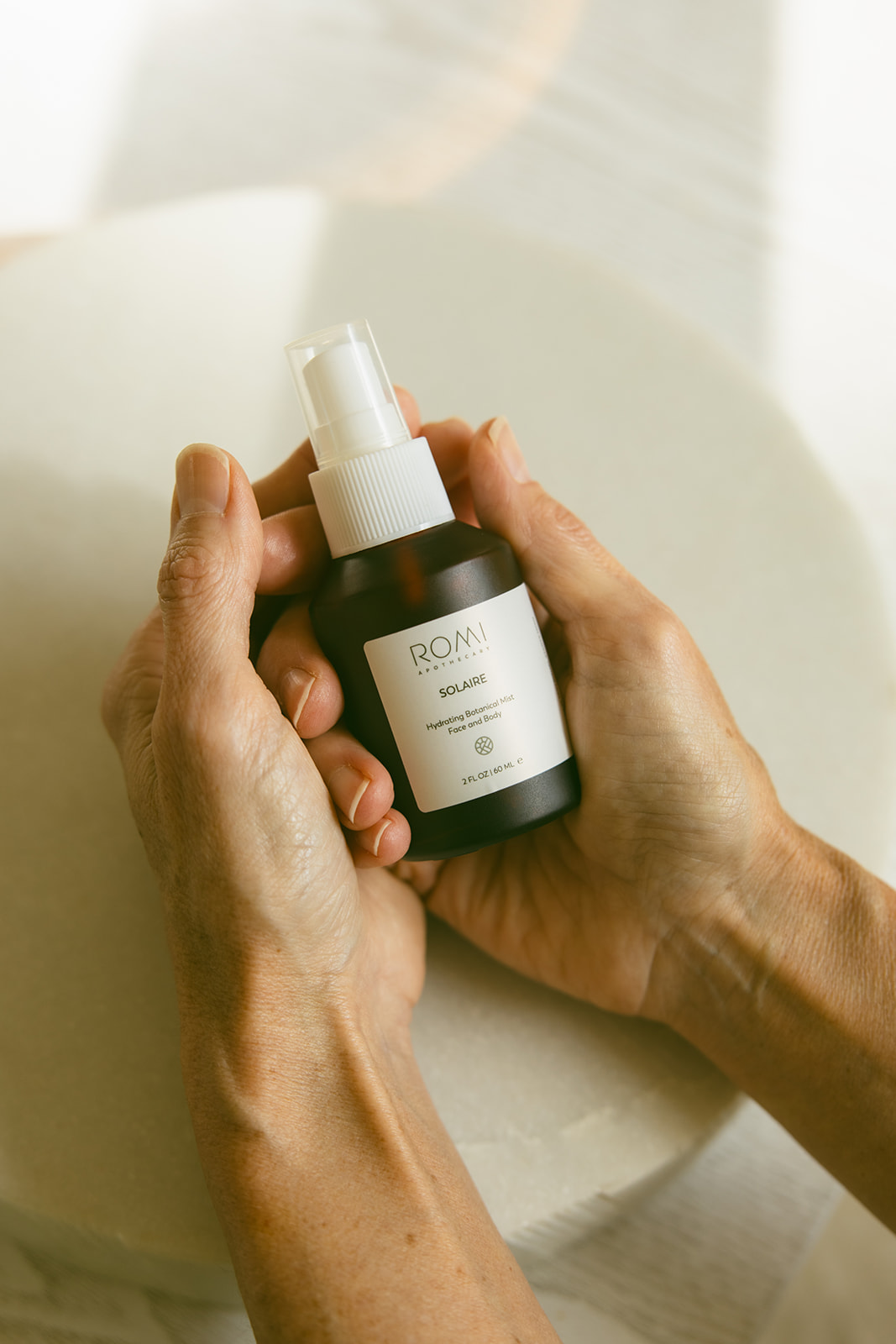 Solaire Hydrating Mist: Cooling Refreshing Water
Where Lunaire is grounding and calming, Solaire is cooling and invigorating – bright, refreshing water that energizes and cools.
The base is copper-distilled aloe, providing hydration and foundation.
Cucumber brings genuine cooling properties – the same reason cucumbers are traditionally placed on eyes. Cucumber’s high water content creates evaporative cooling, and compounds in cucumber contribute to that refreshing sensation.
Lime adds brightness – citrus notes that feel awakening and clarifying.
Spearmint and peppermint contribute their characteristic cooling effect. The menthol and related compounds in mint activate the same receptors in your skin that respond to cold temperature, creating cooling sensation even without actual temperature change.
Together these create water that refreshes and invigorates. Many people use Solaire in the morning – misting it on after cleansing feels like waking your skin up, clearing away sleep, preparing to meet the day with energy and clarity.
But Solaire shines any time you need cooling or invigoration. Post-workout when your face is flushed and heated, Solaire provides immediate refreshing relief. On warm days when you’re overheated, it cools genuinely. During afternoon energy slumps, misting Solaire can provide a pick-me-up that’s more than just the cooling sensation – the bright citrus and mint scents are genuinely energizing. After being outside in sun or heat, after physical activity, any time your skin feels warm and you want that cooling refreshment – this is the water for that moment.
Some people keep Solaire in their bag or at their desk specifically for these mid-day moments when they need a reset and refresh. The cooling mist combined with the invigorating scent creates an instant shift.
The scent is cucumber with mint and lime – clean, bright, unmistakably refreshing and energizing.
How to Choose Between Them
The most straightforward framework is skin type:
Normal to oily skin → Rose and Yarrow
The gentle astringent properties help balance oil production while delivering necessary water. Appropriate for skin that wants refinement alongside hydration.
Dry to normal skin → Elderflower
Pure hydration without any toning effect. Can be layered generously. Appropriate for skin that needs all the moisture it can get.
But what you need in any given moment offers another approach:
Grounding and calm → Lunaire
Evening ritual, yes, but also after stress, during meditation, anytime you need to center yourself, during times of restoration and repair
Cooling and invigoration → Solaire
Morning wake-up, yes, but also post-workout, when overheated, afternoon energy boost, anytime you want refreshing coolness and energizing brightness
Balance and refinement → Rose and Yarrow
Anytime your skin wants hydration with gentle toning
Pure moisture and gentleness → Elderflower
Anytime your skin feels dry or sensitive, when you want to layer water generously
Or you can choose based on what your skin seems to want in any given moment:
Does your skin feel balanced but want hydration plus subtle refinement? → Rose and Yarrow
Does your skin feel dry, thirsty, like it wants pure moisture? → Elderflower
Do you feel scattered and need grounding? Does your skin need calming? → Lunaire
Do you feel warm, need cooling, want invigoration? → Solaire
Many people keep multiple toners and choose based on these observations rather than following one fixed routine. Rose and Yarrow when skin feels balanced. Elderflower when it feels dry. Solaire when they’re overheated or need energy. Lunaire when they need calm or it’s evening. Different toners serving different moments and needs.
This is responsive care – adjusting based on what your skin and your whole being are actually asking for rather than rigidly following the same routine regardless of conditions.
 How to Use Toner
The practice itself is simple:
Start with clean skin. Cleanse thoroughly first – we recommend Earthly Cleansing Oil for gentle effective removal of everything on your face without stripping.
Don’t dry completely. After cleansing, pat your face gently with a towel but leave your skin damp. Water absorbs into water more readily than into completely dry skin. That residual dampness helps the toner penetrate better.
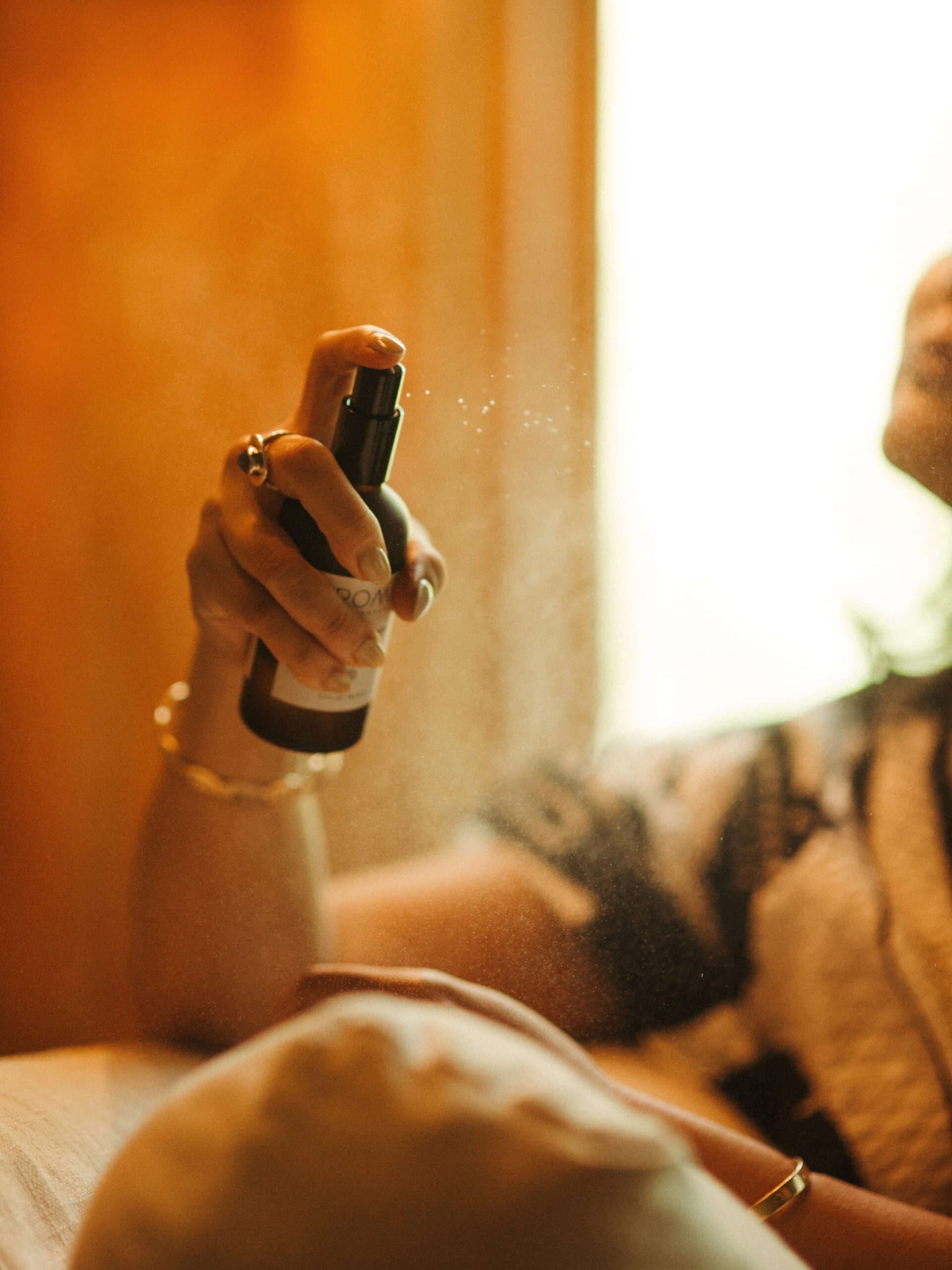
Apply generously. Mist toner onto your face, or if you prefer, press it on with your palms. Make sure you’re using enough that your face is genuinely wet, not just lightly damp.
Watch your skin’s response. If the toner absorbs instantly – water disappearing into your skin within seconds – that’s your skin telling you it’s thirsty. Apply more.
Layer as needed. If your skin keeps drinking in toner readily, keep applying. Second layer. Third layer. Fourth if your skin is still absorbing. Many people are surprised to discover their skin can accept far more water than they’ve been giving it.
Let it absorb. Give each layer fifteen to thirty seconds to sink in before deciding whether to add another.
You’ll feel when it’s enough. Eventually, an application will sit on your skin’s surface for a moment before absorbing rather than disappearing instantly. This signals your skin is satisfied for now.
Continue your routine. If you use serum (Reishi Tide, Restore, Brilliance), apply it now to this freshly hydrated skin. Then facial oil (Queen of Winter, Sunrise). Everything works better built on a foundation of adequate water.
That’s the practice. Simple. Essential. Your skin needs water. Give it water.
What to Expect
With consistent toner use, properly hydrating your skin morning and evening, you’ll notice changes:
Immediately: Your skin feels different after toning – softer, more plump, genuinely hydrated rather than just damp. Products applied afterward absorb more readily.
Within days: Fine lines from dehydration become less visible as your skin maintains better moisture levels. Your face has a slightly different quality – more vitality, more presence.
Within weeks: Your skin’s overall function improves. Oil production may balance as your skin gets adequate water and stops overproducing oil to compensate for dehydration. Texture smooths. Your skin appears more even.
Long term: You establish a baseline of proper hydration that supports everything else. Serums work better. Oils absorb better. Your skin looks healthier because it is healthier – adequately hydrated at the cellular level where all function depends on water.
This isn’t dramatic transformation. It’s foundational improvement. Your skin working the way it’s meant to work when it has what it needs.
Why This Matters
Skincare often focuses on treatment ingredients – the vitamins, the acids, the active compounds that address specific concerns. Or on protection – the sunscreens, the antioxidants, the barrier-supporting oils.
These all matter. But they all depend on a foundation that’s often neglected: adequate water.
Your skin is seventy percent water. Every cellular process requires water. Your skin loses water constantly through unavoidable evaporation. Without replacing that water topically, delivering it in a form your skin can use, all your other careful choices work at reduced effectiveness.
Toner isn’t the forgotten step or the optional extra. Toner is water for your skin. Water delivered effectively. Water your cells can actually use.
Start here. Build everything else on this foundation. Your skin will show you the difference ✨
The ROMI Apothecary Team
Related Reading:
- Reading the Signs: Your Skin in Seasonal Transition
- Surface Renewal – The Complete Guide to Gentle Exfoliation for Late Winter
- Going Deeper – The Complete Guide to Serums for Repair & Restore
Products featured in this article: