

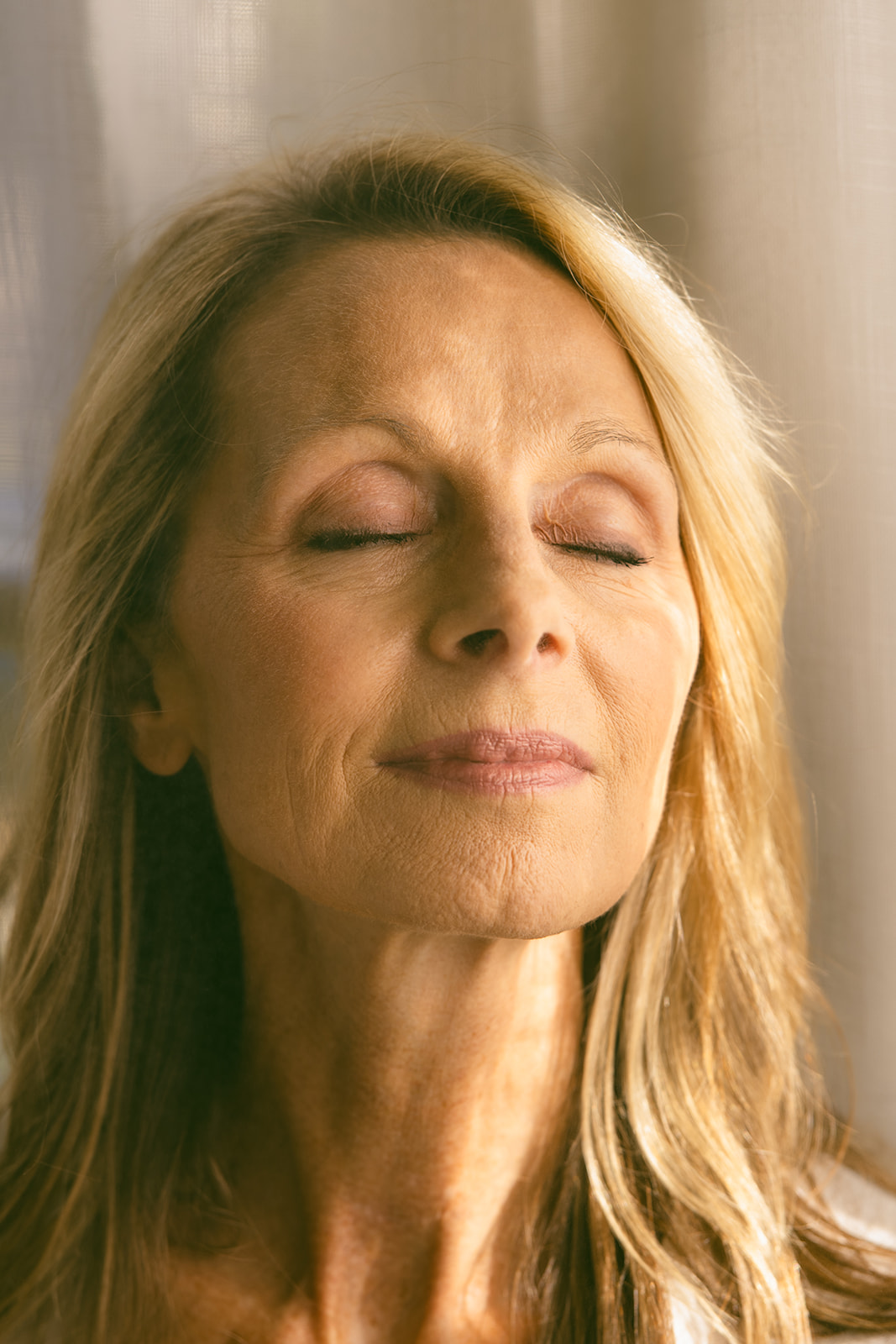
Surface Renewal – The Complete Guide to Gentle Exfoliation for Late Winter
You’ve been going deeper. Serums delivering concentrated actives into dermal layers. Supporting hydration, repair, and radiance where these processes actually happen.
That work matters. But there’s a surface issue that develops over winter that can block all that deeper work from showing.
Dead cell buildup.
After months of cold air, indoor heating, and your skin’s natural slowing of cell turnover in winter conditions – you’ve accumulated a layer of dead cells on your stratum corneum that won’t shed on their own.
This layer makes your skin look dull even when it’s hydrated underneath. It blocks light reflection. It prevents your carefully chosen serums and oils from penetrating as well as they should.
This is what exfoliation addresses. Not scrubbing away “bad” skin. Gently assisting the natural cell turnover process that has slowed down in winter.
Surface renewal after deep repair makes sense. You’ve supported what’s underneath. Now clear the path so that work can actually show.
Understanding Skin Cell Turnover
Let’s start with what’s actually happening on your skin’s surface.
The natural process
Your skin constantly generates new cells in the basal layer (the deepest part of your epidermis). These cells move upward over approximately 28 days, gradually flattening and hardening as they go.
By the time they reach the surface – the stratum corneum – they’re dead. They’re keratinocytes that have lost their nuclei and filled with keratin protein. They form a protective layer that keeps moisture in and irritants out.
After serving their protective purpose for a few days, these cells naturally detach and shed. This process – desquamation – happens constantly throughout your life. You shed millions of skin cells every day without noticing.
What happens in winter
This natural process slows down when temperatures drop.
Cold air reduces circulation to your skin. Your body prioritizes keeping your core and vital organs warm, which means less blood flow to your face and extremities. Less circulation means slower cellular processes, including the enzyme activity that helps dead cells detach.
Low humidity – both outdoor cold air and indoor heated air – creates conditions where dead cells cling together more than they would in moister environments.
Protective products layered daily (oils, balms, thick moisturizers) can inadvertently trap some dead cells that would normally shed.
The result: dead cell accumulation that builds up over weeks and months of winter. Your skin develops a thicker stratum corneum than it maintains in other seasons.
Why this matters
This accumulated layer creates three problems:
- Blocks light reflection – Dead cells are less translucent than living cells. They scatter light rather than reflecting it evenly. This is why your skin looks dull or grey even when it’s moisturized.
- Prevents product penetration – Serums and oils have to get through this dead layer to reach living tissue. The thicker the layer, the less effectively your products work.
- Contributes to rough texture – Unevenly distributed dead cells create the rough, bumpy feeling that develops by late winter.
Your skin isn’t damaged. It’s just carrying more dead cells than optimal. Exfoliation removes this excess so your healthy skin beneath can show and function properly.
Gentle Exfoliation vs. Harsh Exfoliation
Not all exfoliation supports your skin. Some methods damage more than they help.
What harsh exfoliation looks like:
Rough physical particles – Crushed walnut shells, apricot kernels, other jagged materials that create micro-tears in skin. These feel “scrubby” but the jagged edges damage tissue.
Over-exfoliation – Daily use or multiple times daily strips your protective barrier faster than it can regenerate. You end up with compromised, irritated skin rather than renewed skin.
Aggressive pressure – Scrubbing hard with the belief that more force = better results. This inflames tissue and can cause lasting damage to capillaries.
Wrong chemical strength – Using acids (AHAs, BHAs) at concentrations too strong for your skin type, or using them too frequently.
What gentle exfoliation looks like:
Ultra-fine particles – Ground so finely they lift dead cells without abrasion. They should feel soft against your skin, not scratchy.
Appropriate frequency – Once or twice weekly for most people. Matching the rate at which excess dead cells accumulate rather than trying to force faster turnover.
Light pressure – Gentle circular massage that feels pleasant, not aggressive. The particles do the work; you’re just guiding them.
Natural methods – Botanicals, clays, and tools that work with your skin’s biology rather than forcing change through chemical reactions.
The principle: assist what your skin already wants to do. Remove what’s ready to go. Don’t force, strip, or damage in the process.
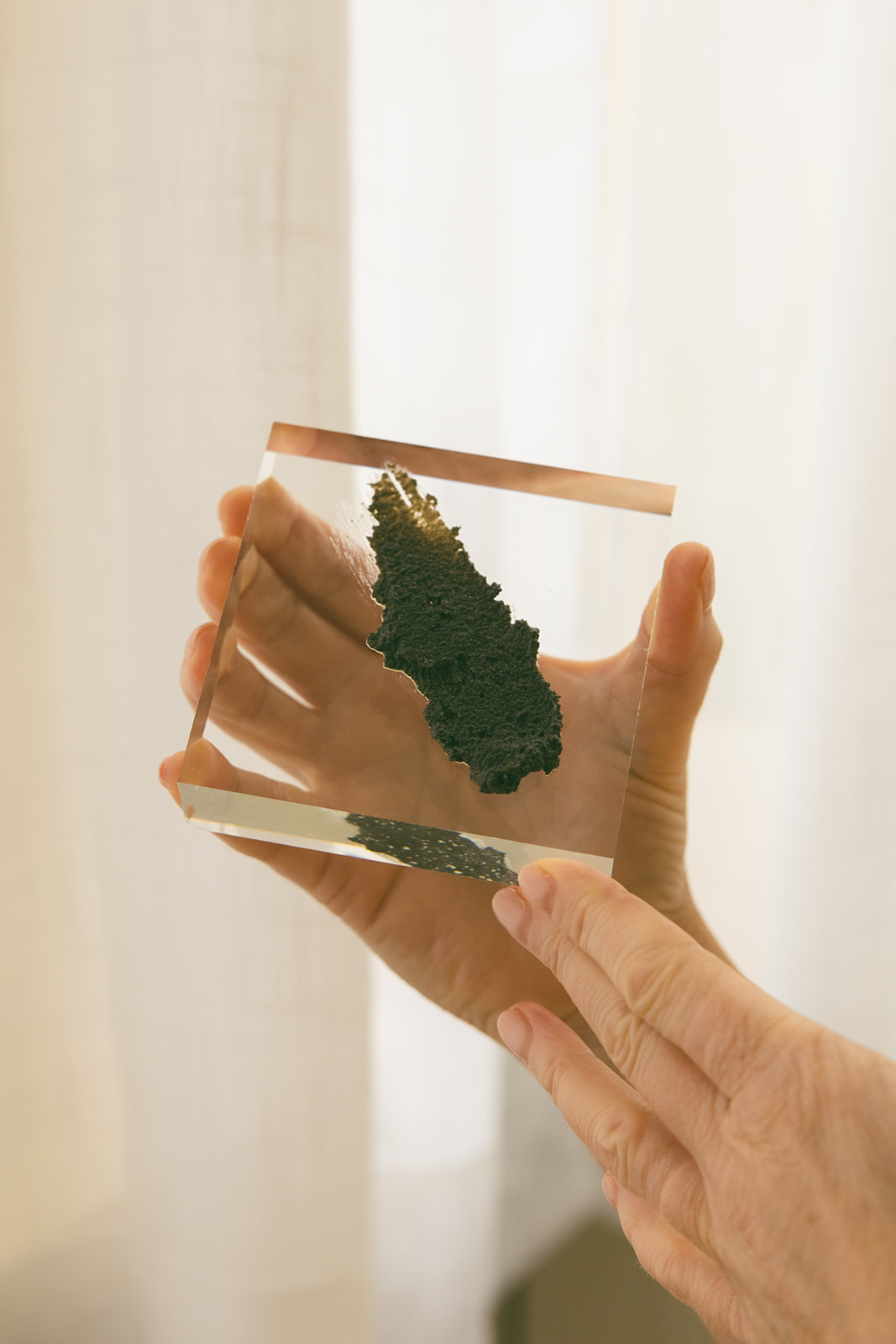
Ma’ema’e Exfoliating Face Polish: Ultra-Fine Botanical Exfoliation
Ma’ema’e means “to cleanse” in Hawaiian – a nod to growing up in Honolulu and the concept of purification that’s gentle rather than harsh.
This polish was formulated specifically for effective exfoliation without abrasion. Triple-filtered, ultra-fine particles that lift dead cells while remaining soft enough for sensitive skin.
The October 2025 reformulation
We recently improved Ma’ema’e by adding oils and emulsifiers to the base formula. The result: easier application, less mess, and beautiful slip when massaging onto skin.
The particle size remains ultra-fine – this is still the gentle, non-abrasive polish it’s always been. But now it spreads more luxuriously and rinses more cleanly.
What’s in it:
Kaolin clay – A gentle clay that draws out impurities while the fine particles provide physical exfoliation. Kaolin is one of the softest clays, appropriate even for sensitive skin.
Triple-milled herbs – Lavender, rose, oat, rice bran. These herbs are ground to an exceptionally fine powder – much finer than typical face scrubs. The result is effective exfoliation without the scratchiness of rougher particles.
Hawaiian botanicals – Moringa leaf (freshly harvested from the Big Island of Hawai’i), Pacific Ocean spirulina, hibiscus flower, shade-grown matcha. These bring concentrated phytonutrients: B vitamins for skin health, beta-carotene for antioxidant protection, amino acids for tissue support, vitamin K for circulation.
Raw honey – From small-apiary cultivation. Honey is a humectant (attracts moisture) and has been used traditionally for skin healing. It adds natural sweetness and helps the polish glide smoothly.
Perilla (shiso) seed oil – A Japanese botanical oil rich in omega-3 fatty acids. Adds emollience and helps create that syrup-like consistency when mixed with water.
Castor oil – Known for its ability to penetrate deeply and carry other ingredients with it. Creates slip and helps the polish rinse cleanly.
The combination creates a polish that’s joyously tactile – it feels good to use while being genuinely effective at surface renewal.
How it works:
The ultra-fine particles physically lift dead cells through gentle friction. As you massage the polish across your skin, these soft particles catch dead cells and carry them away without scratching or abrading the healthy skin beneath.
The clay component draws out impurities from pores while providing additional gentle exfoliation.
The oils create slip so the polish moves smoothly rather than dragging.
The result: dead cells removed, pores refined, skin surface polished to smoothness – all without compromising your barrier or causing irritation.
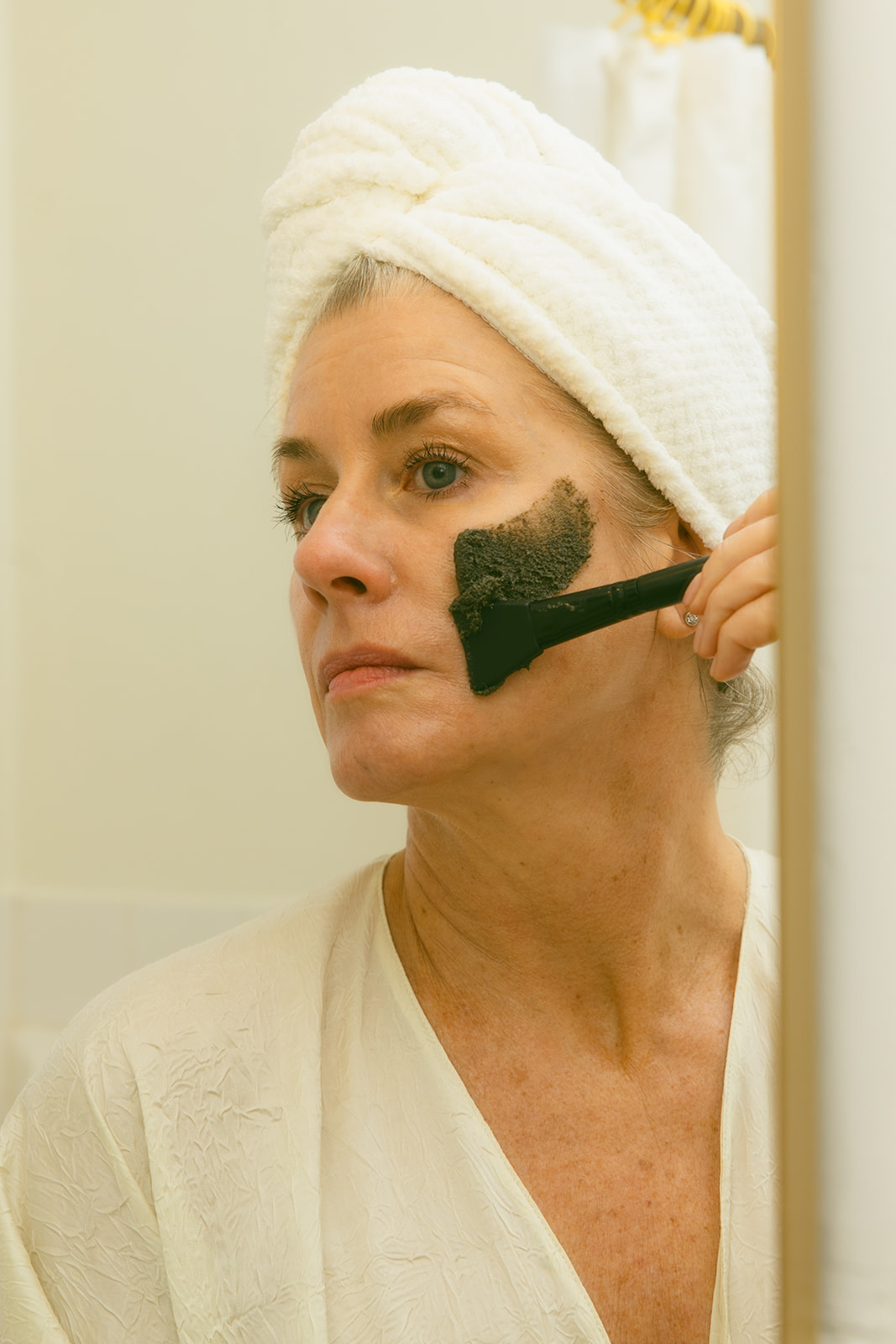
How to Use Ma’ema’e Face Polish
The application method matters as much as the product itself.
Step 1: Start with clean skin
Cleanse first to remove makeup, sunscreen, and daily buildup. We recommend Earthly Cleansing Oil – it removes everything gently without stripping, leaving your skin ready for exfoliation.
Don’t exfoliate dirty skin. You’ll just be moving around surface grime rather than accessing the dead cell layer beneath.
Step 2: Get your skin dripping wet
This is critical. Ma’ema’e needs moisture to work properly.
Wet your face thoroughly with water or one of our hydrosols. We love Lunaire or Solaire for this – they add beneficial botanicals while providing the moisture the polish needs.
Your skin should be dripping. Not just damp – actually wet with water running down your face.
Step 3: Mix the polish
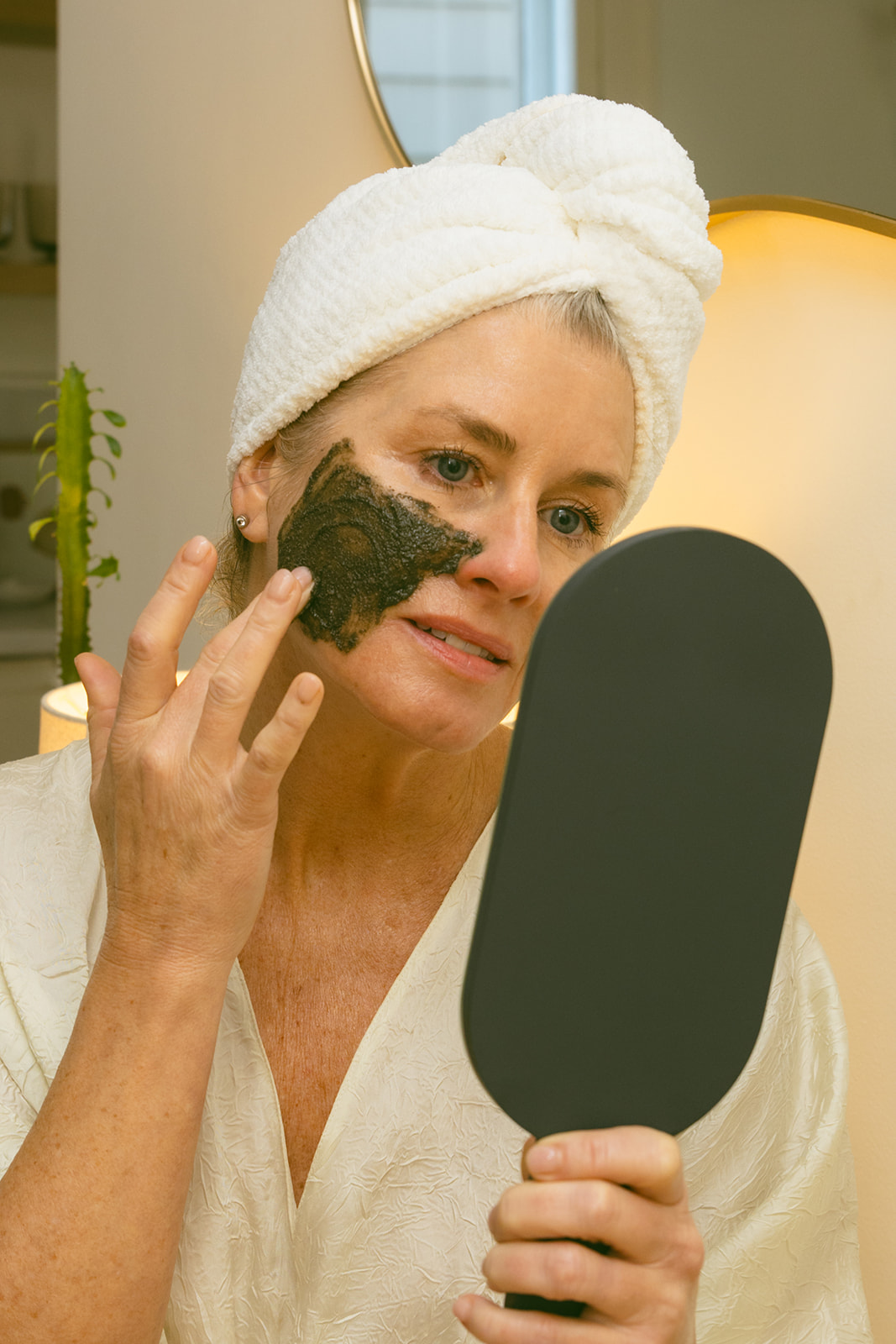
Take 1 teaspoon of Ma’ema’e. Divide it roughly across your face – a bit on forehead, cheeks, chin.
Now add 3-5 pumps of hydrosol or splashes of water directly to your face. Mix with your fingertips until the polish thins to a syrup consistency.
It should move like honey – thick enough to stay where you put it but thin enough to spread easily. If it’s too thick, add more water. If it’s too thin, add a bit more of the Ma’ema’e.
Step 4: Massage for 2-3 full minutes
This is where the exfoliation happens. Small, gentle circular motions with your fingertips.
Start with your forehead – circles across your brow, your temples. Move to your cheeks – gentle circles over the apples of your cheeks, down toward your jawline. Your nose and chin – areas that tend to have more texture and congestion. Your neck if you want.
Keep the motions gentle. You’re not scrubbing. The ultra-fine particles are doing the work – you’re just guiding them across your skin’s surface.
Concentrate on areas of congestion but avoid the delicate eye area.
Add more water or hydrosol if the polish starts to dry or tighten. Don’t let it sit as a mask unless you intend to – and even then, don’t let it fully dry.
Take the full 2-3 minutes. This is where the practice becomes ritual rather than task.
Step 5: Rinse thoroughly
Lukewarm water. Rinse until all traces of the polish are gone.
Some people find it easier to use a damp soft cloth for removal. Others prefer rinsing in the shower where water can run freely.
Make sure you get it all – check your hairline, jawline, behind your ears if you brought the polish down your neck.
Step 6: Pat dry and notice
Your skin feels different immediately. Lusciously smooth. Soft. Refined.
Look at your face in the mirror. The dullness is gone. Light reflects evenly. There’s a clarity that wasn’t there before.
This is your skin without the dead cell barrier. This is what you’ve been supporting with all your deeper work.
Step 7: Continue your routine
Now tone, apply serum, and seal with oil as usual. Notice how differently your products absorb. How readily your skin drinks in the toner. How smoothly the serum spreads. How evenly the oil seals.
This is why exfoliation matters – not for its own sake, but for what it allows everything else to do.
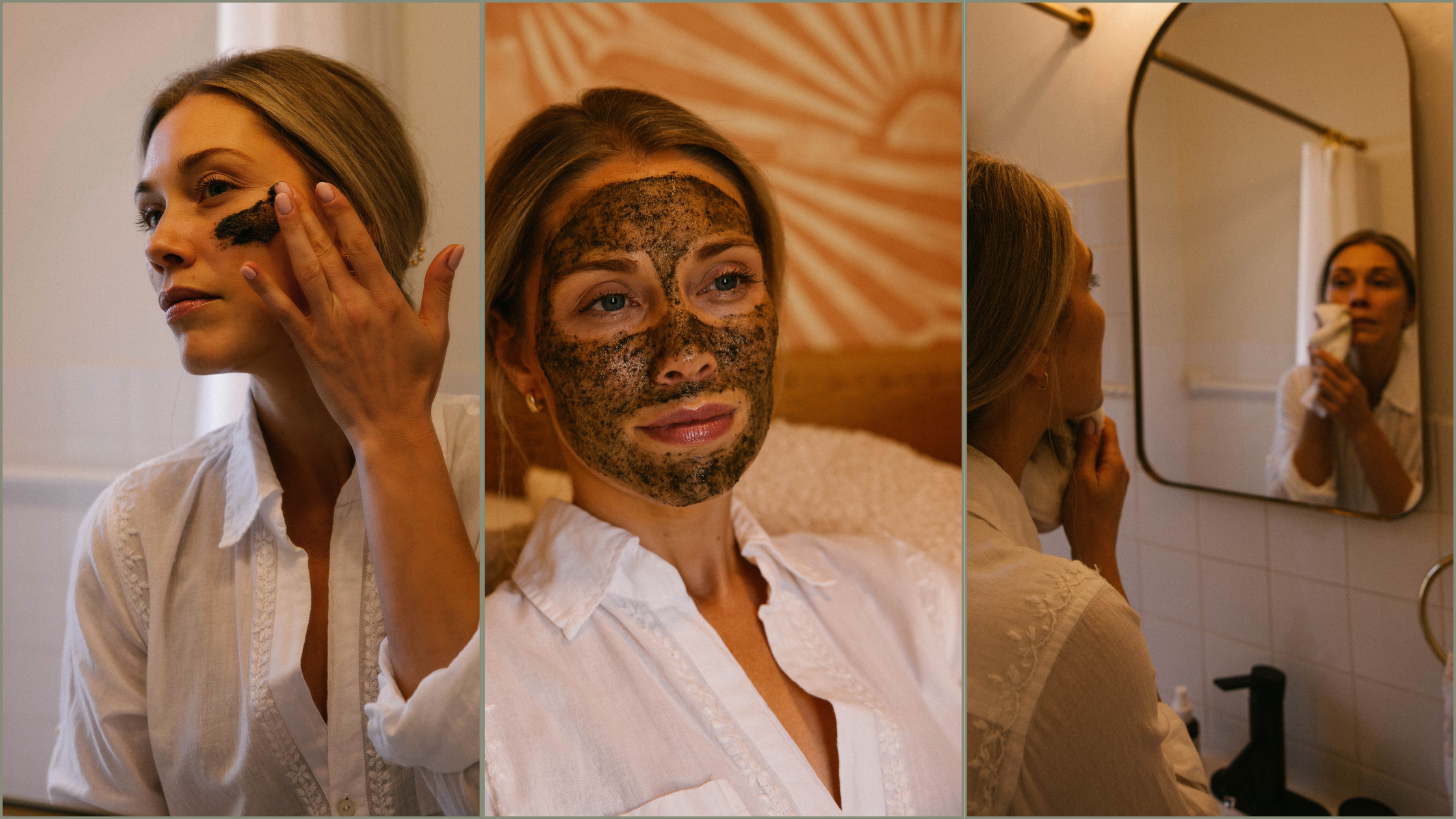
How Often to Exfoliate with Ma’ema’e
Once weekly is right for most people most of the time.
This frequency removes accumulated dead cells without over-stripping. Your skin has time to regenerate its protective barrier between exfoliations.
Twice weekly works if:
- Your skin tolerates it well (no redness, tightness, or irritation after use)
- You have naturally oilier skin with faster cell turnover
- You see visible improvement going from once to twice weekly
- You’re not using other active treatments (retinol, acids) that already increase turnover
Less than once weekly if:
- Your skin is very sensitive or reactive
- You’re new to exfoliation and want to see how your skin responds
- You use prescription actives that already accelerate turnover
- Your skin feels thin, compromised, or irritated
Listen to your skin:
After exfoliating, your skin should feel smooth and look brighter. Not tight, red, or irritated.
If you exfoliate and experience tightness, redness, or any discomfort, you went too hard (too much pressure during massage) or too often (your skin needs more recovery time between sessions).
Scale back to once every 10 days and use gentler pressure. Build up gradually as your skin adapts.
If your skin looks and feels great after weekly exfoliation, that’s your rhythm. Don’t increase frequency just because you can – more isn’t always better.
The goal is optimal turnover support, not maximum exfoliation.
Dry Brushing: Exfoliation Without Water
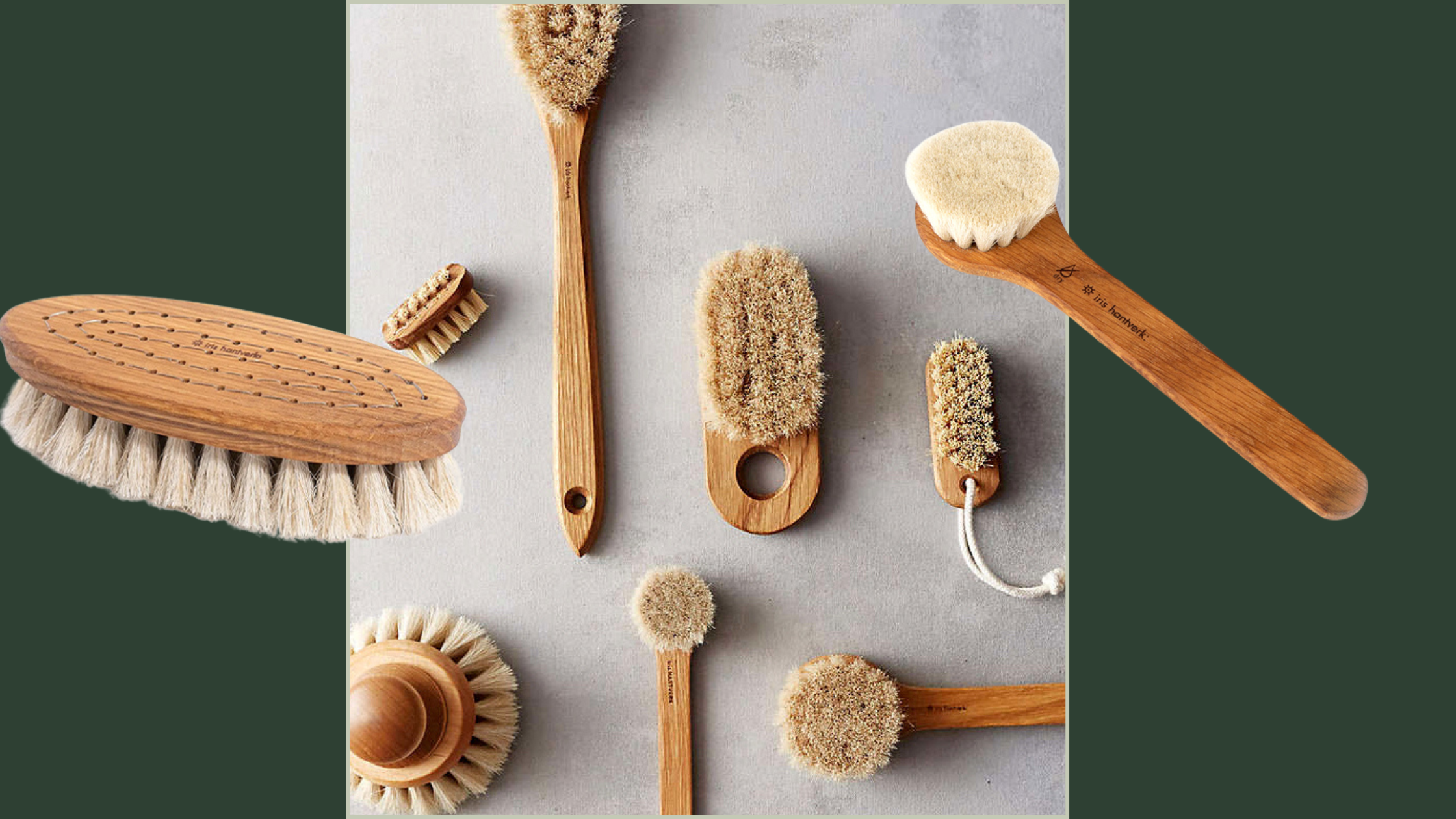
Beyond Ma’ema’e Face Polish, we offer another approach to gentle exfoliation: Swedish-crafted dry brushes.
Face Brush – For Facial Exfoliation
Handcrafted in Sweden using oil-treated oak and soft goat hair. This brush is used dry – never wet.
How it works:
The soft bristles manually lift dead cells through gentle friction. As you brush in circular motions, the goat hair catches dead cells and carries them away.
But dry brushing does more than just exfoliate. It increases circulation – bringing more blood flow to the surface of your skin. It supports lymphatic drainage – helping your lymph system move waste products away from tissues.
The result: brighter complexion, improved skin tone, reduced puffiness, gentle exfoliation – all without water or products.
How to use it:
On clean, dry skin (not damp or wet). In the morning works beautifully – this can replace washing with soap on winter mornings when your skin doesn’t need heavy cleansing.
Gentle circular motions across your face for 5 minutes. Avoid the delicate eye area and mouth.
The pressure should feel pleasant – stimulating but not harsh. You want to feel the bristles against your skin but not discomfort.
After brushing, follow with your regular routine. Mist with toner, apply serum, seal with oil.
Use once or twice weekly. More frequent use is fine if your skin tolerates it well – some people brush daily as part of their morning ritual.
Care:
This is a dry-use brush – don’t get it wet. The wood handle is sensitive to moisture.
To clean, sprinkle corn starch on the bristles and massage gently into the brush. Shake off well. This absorbs oils and keeps the bristles fresh.
Body Dry Brushes – For Full Body Exfoliation
Also handcrafted in Sweden using oak and horse hair. These brushes can be used wet or dry, but for exfoliation purposes, use them dry.
We offer two versions:
- Loop handle – Horse hair bristles (softer)
- No handle – Horse hair plus tampico fiber bristles (extra scrubbing power)
How it works:
Dry brushing the body supports lymphatic drainage, removes dead surface cells, and increases circulation. The long strokes toward your heart follow the direction of lymph flow, helping this important system move waste products through your body.
How to use it:
Before showering, on dry skin. Start at your feet.
Long, sweeping strokes – not circular like on the face. Move upward toward your heart. Feet → calves → thighs → hips. Hands → forearms → upper arms → shoulders. Belly and back using comfortable strokes.
Moderate pressure – firm enough to feel stimulation, gentle enough to remain comfortable. Your skin should turn slightly pink from increased circulation but not red from irritation.
2-3 minutes for your whole body. Don’t overthink it – this should feel good, not like a chore.
Then shower as usual. Notice how your body products absorb afterward – everything penetrates better on freshly brushed skin.
Use 2-3 times weekly, or daily if your skin enjoys it. This is one practice where daily use is fine for most people.
Care:
These brushes can get wet (unlike the face brush), but store them standing on the bristles or hanging so water drains away from the wooden handle.
To clean, rinse after use and let dry bristle-side down. Periodically clean with a small amount of mild soap worked into the bristles, rinse thoroughly, and dry completely.
After Exfoliation: The Optimal Sequence
Freshly exfoliated skin is most receptive to everything you apply. You’ve cleared the dead cell barrier – products can now reach living tissue directly.
The sequence:
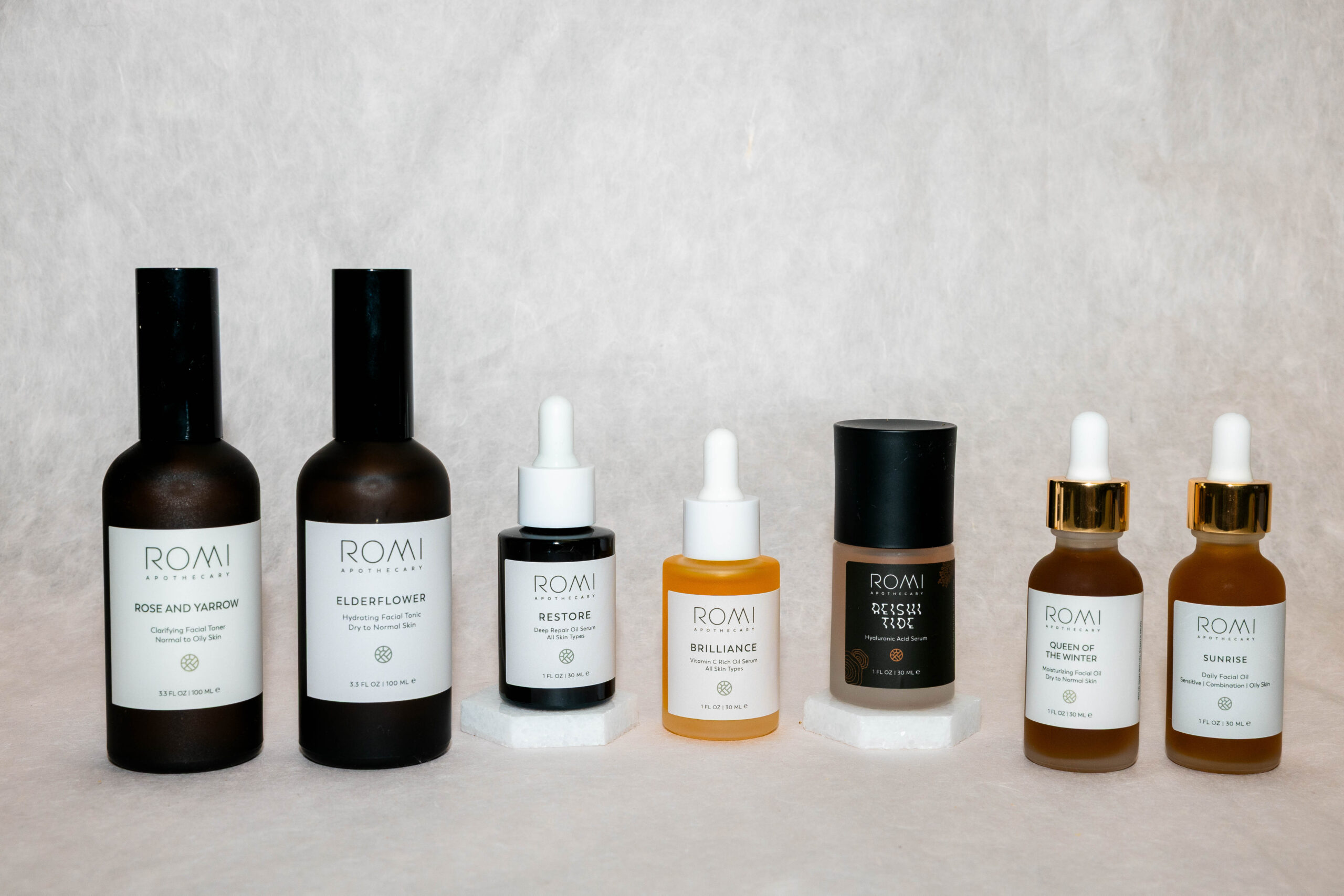
Tone generously (Rose and Yarrow, Elderflower, Lunaire, or Solaire) – your skin will drink this in faster than usual.
Apply serum while skin is still damp (Reishi Tide, Restore, or Brilliance) – penetration is optimal now.
Seal with oil (Queen of Winter, Sunrise) – it will spread more easily than usual.
This is why people who exfoliate regularly notice their products seem more effective. They are – because they can actually reach where they need to go.
Exfoliation for Different Skin Types
While Ma’ema’e is gentle enough for sensitive skin, application should vary based on your skin’s specific needs.
 For sensitive or reactive skin:
- Start with once every 10 days to test tolerance
- Use very light pressure during massage
- Keep sessions to 2 minutes maximum
- Rinse with cool rather than warm water
- Follow immediately with calming toner and gentle products
- Watch for any redness or irritation; adjust frequency if needed
For dry/dehydrated skin:
- Once weekly is usually optimal
- Focus massage on rough patches (typically cheeks, around nose)
- Don’t avoid oily areas – they still have dead cell accumulation
- Be generous with hydrosol when mixing – keep the polish very wet
- Follow with Reishi Tide Serum for deep hydration
- Seal with Queen of Winter Oil or balm
For oily or combination skin:
- Can often handle twice weekly
- Spend extra time on congested areas (T-zone, chin)
- The clay in Ma’ema’e particularly benefits oily skin
- Follow with Rose and Yarrow Toner for gentle astringency
- Sunrise Oil works beautifully post-exfoliation for oily types
For mature skin:
- Once weekly consistently
- Be especially gentle – mature skin has thinner protective barrier
- Take the full 3 minutes to support circulation
- Follow with Restore Serum for regeneration support
- Consider layering Reishi Tide + Brilliance for hydration plus radiance
For acne-prone skin:
- Exfoliation helps prevent congestion by keeping pores clear
- Once or twice weekly depending on tolerance
- Avoid active breakouts – don’t exfoliate directly over inflamed acne
- Focus on areas with closed comedones or rough texture
- Restore Serum post-exfoliation supports healing
- Sunrise Oil provides non-comedogenic sealing
The key: start conservatively, observe your skin’s response, adjust accordingly.
Seasonal Timing: Why Late Winter Matters
There’s a reason we’re talking about exfoliation now, in late winter, rather than earlier in the season.
Early winter (November-December): Your skin is adjusting to cold. Your focus is on building barrier protection, increasing moisture, preventing damage before it accumulates.
Exfoliation isn’t the priority. Protection is.
Mid-winter (January-early February): Your skin is in survival mode. Deep repair with serums. Heavy sealing with oils. Supporting what’s underneath while your skin deals with ongoing harsh conditions.
Exfoliation is risky here – you don’t want to remove any protection while conditions are still brutal.
Late winter (late February-March): The worst of winter is behind you (or nearly so). Your skin has accumulated months of dead cell buildup. Spring is approaching – your skin will naturally start shifting its needs.
This is when exfoliation makes sense. You’re preparing for transition. Removing what accumulated during the hard months. Revealing the renewed skin you’ve been supporting with deeper work all along.
Spring (April-May): Exfoliation becomes easier and more frequent as conditions warm. Your skin’s natural turnover rate increases. You might move from once weekly to twice weekly naturally.
But the foundation is laid now, in late winter, when you first address the buildup and establish the practice.
Timing matters. This is the right time.

The Ritual of Surface Renewal
You don’t have to exfoliate often for it to be meaningful. Once weekly – that’s 52 times a year. That’s enough.
But when you do it, make it matter.
 The practice:
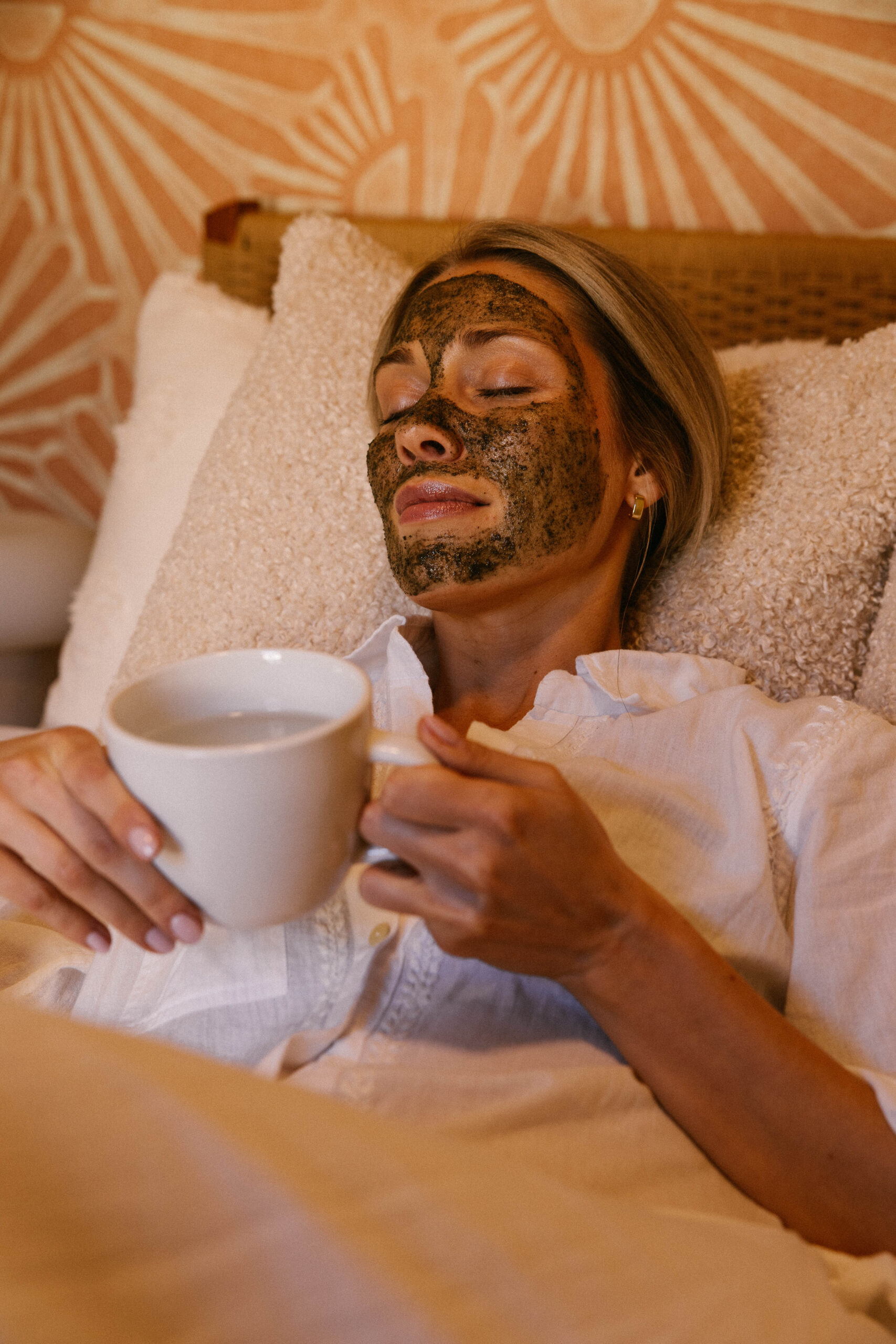
Set aside time. Not rushed in the morning before work. Not exhausted at night before bed. Find 15 minutes when you can be present.
Cleanse thoroughly. You’re preparing your skin for attention.
Wet your face. Feel the water running down your neck. The coolness. The way it changes your skin’s texture.
Scoop Ma’ema’a into your hand. The thick softness turning to honey consistency as you add water or toner. The scent emerging – subtle rose and lavender, trace of ocean.
Apply it. Feel the syrup-thick texture. The way it spreads without resistance because of the oils in the formula.
Begin massaging. Small circles. Forehead. Temples. Cheeks. Notice which areas feel rougher. Which areas are smoother. Notice the very gentle friction of ultra-fine particles against your skin.
This is presence. This is the opposite of rushing through your routine while thinking about your day.
Two minutes. Three minutes. However long feels right.
Rinse slowly. Watch the botanical-tinted water run off your face. Feel your skin emerge smooth underneath.
Pat dry. Look at yourself. Your skin is brighter. Clearer. Light catches it differently.
Then continue. Tone. Serum. Oil. Notice how everything works better now.
This is ritual. Not just exfoliation – attention. Not just surface renewal – practice.
Why ritual matters:
You can exfoliate mechanically – quick application, quick rinse, move on. It will work functionally. Your dead cells will be removed.
But you’ll miss the opportunity for something more.
When you slow down enough to notice – to feel texture, to smell botanicals, to observe your skin’s response – exfoliation becomes a form of care that serves more than just your skin.
It becomes a practice of paying attention to yourself. Of noticing. Of being present with your body rather than just maintaining it.
The smoothness afterward is real. The brighter complexion is real. But so is the pause. So is the attention.
Both matter ✨
Common Questions About Exfoliation
Can I exfoliate if I use retinol or acids?
Yes, but carefully. If you use prescription-strength actives, exfoliate on different nights. If you use gentler over-the-counter versions, monitor your skin closely. Some people can combine them; some can’t. Let your skin tell you.
Should I exfoliate before or after cleansing?
After. Always cleanse first to remove makeup, sunscreen, and surface grime. Exfoliation works on clean skin.
Can I use Ma’ema’e on my body?
You can, though it’s formulated for facial skin and the price point makes it impractical for full body use. The dry brushes are more economical for body exfoliation.
What if my skin gets red or irritated?
You went too hard (pressure) or too often (frequency). Scale back immediately. Let your skin recover fully before trying again with a gentler approach.
Can I exfoliate more than twice weekly?
You can, but most people shouldn’t. More frequent exfoliation rarely improves results and often causes problems. Twice weekly is the upper limit for most skin types.
Does exfoliation thin my skin over time?
No. Gentle exfoliation removes dead cells that are ready to shed anyway. It doesn’t affect your living skin layers or make your skin thinner. Harsh exfoliation can damage skin, but appropriate gentle exfoliation doesn’t.
Can I make my own exfoliant?
You can try, but achieving ultra-fine particle size requires specialized milling equipment. DIY exfoliants tend to be rougher and more abrasive than properly formulated products.
Is chemical exfoliation better than physical?
Neither is universally better. Both have appropriate uses. Physical exfoliation with ultra-fine particles is gentler for many people than chemical acids. Choose based on your skin’s tolerance and preference.
Surface Renewal as Foundation
You’ve been going deeper all winter. Serums supporting repair at the dermal level. Oils protecting your barrier. Toners prepping and balancing.
That work created healthy skin underneath.
Now clear the path so that health can show.
Ma’ema’e Face Polish once or twice weekly. Swedish dry brushing for face and body. Gentle assistance with what your skin already wants to do – shed what’s no longer needed, reveal what’s alive underneath.
Surface renewal after deep repair. The logical next step.
Not complicated. Not aggressive. Just consistent, gentle care that honors your skin’s natural processes while supporting them when they slow down.
This is how you prepare for the seasonal shift ahead. This is how all your deeper work finally shows.
One application. Smooth skin. Brighter complexion. Products that absorb better.
The results speak for themselves ✨
xx,
The ROMI Apothecary Team