
Rose – The Ancient Ally in Skincare
Rose has been part of human beauty rituals for at least 5,000 years.
Archaeological evidence from ancient Mesopotamia shows rose cultivation and use dating back to 3000 BCE. Ancient Egyptian tombs contained rose wreaths and evidence of rose oil use. By the time written medical texts appeared, rose was already established as an essential medicine.
This is the plant we’re talking about when we talk about rose in skincare, a botanical ally with thousands of years of documented human use.
Rose in Historical Medical Texts
Greek and Roman Medicine
The Greek physician Dioscorides (40-90 CE) documented rose extensively in De Materia Medica, one of the most influential medical texts in Western history. He described rose as cooling, astringent, and useful for inflammations of the skin and eyes.
The Roman naturalist Pliny the Elder (23-79 CE) recorded 32 different remedies using rose in his Natural History. Rose oil, rose water, and rose preparations were standard in Roman medicine and daily life.
Persian and Arabic Medicine
The Persian polymath Avicenna (980-1037 CE) wrote extensively about rose in The Canon of Medicine, which remained a standard medical text in Europe and the Islamic world for over 600 years. He documented rose’s cooling nature, its benefits for skin conditions, and its use in numerous medicinal preparations.
The process of distilling rose water was refined in Persia, and Persian rose water became famous throughout the ancient world for its purity and therapeutic properties.
Traditional Chinese Medicine
Rose (Mei Gui Hua) appears in classical TCM texts as a substance that moves stagnant qi, particularly in the liver and heart meridians. It’s used to support clear, radiant skin as a reflection of internal balance and proper qi circulation.
Ayurvedic Medicine
In Ayurveda, rose (Shatapari or “the hundred-petaled one”) is classified as cooling (pitta-pacifying) and has been used for thousands of years to calm inflammation, support healthy skin, and balance excess heat in the body and mind.
What These Systems Recognized
Across vastly different medical traditions – Greek, Persian, Chinese, Indian, Arabic – certain observations about rose remained consistent:
Rose cools inflammation, Rose gently tones and firms tissue
Rose soothes irritated skin
Rose supports the skin’s natural healing processes
Rose has beneficial effects on both skin health and emotional well-being
This consistency across cultures and centuries isn’t a coincidence. It’s pattern recognition from careful observation over millennia.
Modern phytochemistry has identified specific compounds in rose that support these traditional uses – polyphenols with antioxidant activity, tannins with astringent properties, and various acids that support skin renewal. But the observation of rose’s benefits came first, from thousands of years of human experience.
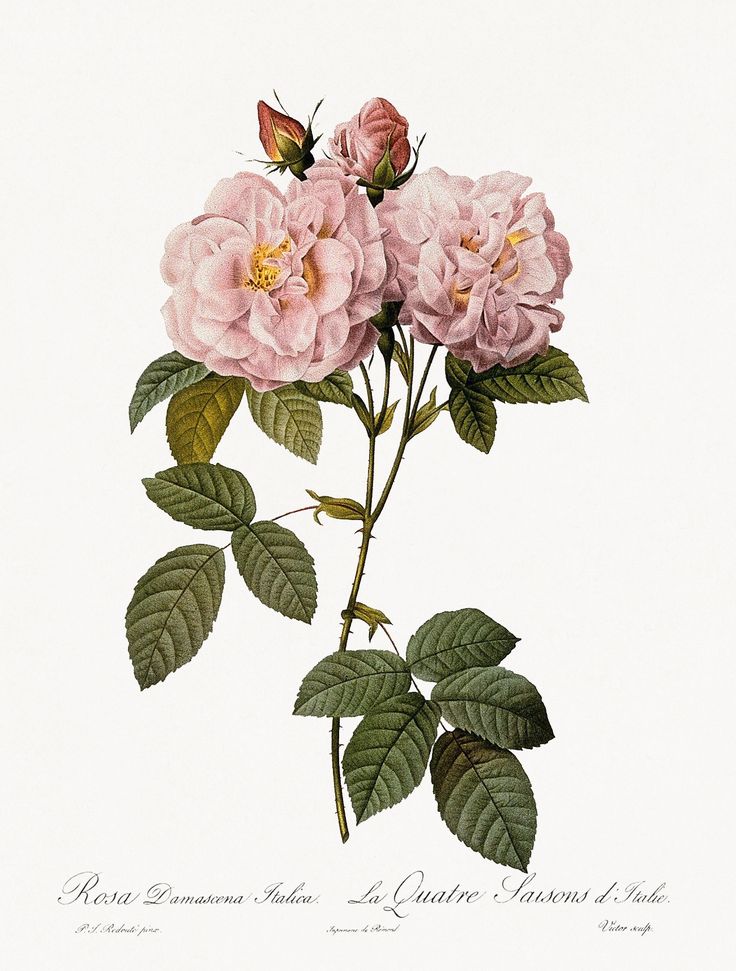
Damask rose (Rosa damascena “Italica”): flowering stem. Colour halftone after Victor, c.1824, after P. J. Redoute. Original public domain image from Wellcome Collection.
Rose in Medieval and Renaissance Europe
Medieval European households maintained stillrooms – dedicated spaces where women prepared medicines, cosmetics, and household remedies. Rose was always central.
Rose water was so valued it was given as dowry. Mothers passed knowledge of rose preparations to daughters as essential inheritance. This more than the beauty of the rose, this was about practical medicine and daily care.
The 12th-century German abbess Hildegard of Bingen wrote about rose in her medical texts, recommending rose preparations for skin health and various ailments.
By the Renaissance, rose water and rose oil were standard components in cosmetic preparations for European nobility and anyone who could access them. Recipe books from this period are filled with rose-based formulations for skin care, each one a variation on knowledge passed down through generations.
What Rose Actually Does
Let’s be specific about what the historical record and traditional medicine systems tell us rose offers:
Anti-inflammatory properties
Rose has been used across cultures to calm inflamed, irritated, or reddened skin. This use is consistent enough across different medical traditions that it warrants attention. Rose contains various polyphenols and other compounds that have been shown in modern research to modulate inflammatory pathways.
Gentle astringency
Rose contains natural tannins – compounds that have a tightening, toning effect on tissue. But unlike harsh astringents, rose maintains gentleness. This makes it valuable for refining pores and firming skin while remaining appropriate for sensitive types.
Traditional texts consistently note this dual quality: rose can tone and firm while remaining soothing. That combination is unusual.
Support for skin renewal
Rose hip seed oil (Rosa canina and other species) has been traditionally used in wound healing and scar treatment. Modern analysis shows rose hip oil is rich in essential fatty acids, vitamin A (as tretinoin precursors), and vitamin C – all of which support the skin’s natural renewal processes.
Hydration and soothing
Rose hydrosol (the water that remains after rose essential oil distillation) has been used for centuries to hydrate and soothe skin. The hydrosol contains water-soluble compounds from the rose petals and has a pH similar to healthy skin, making it ideal as a toner or facial mist.
These aren’t claims we’re making. These are uses documented across multiple traditional medicine systems over thousands of years, now supported by modern phytochemical analysis.
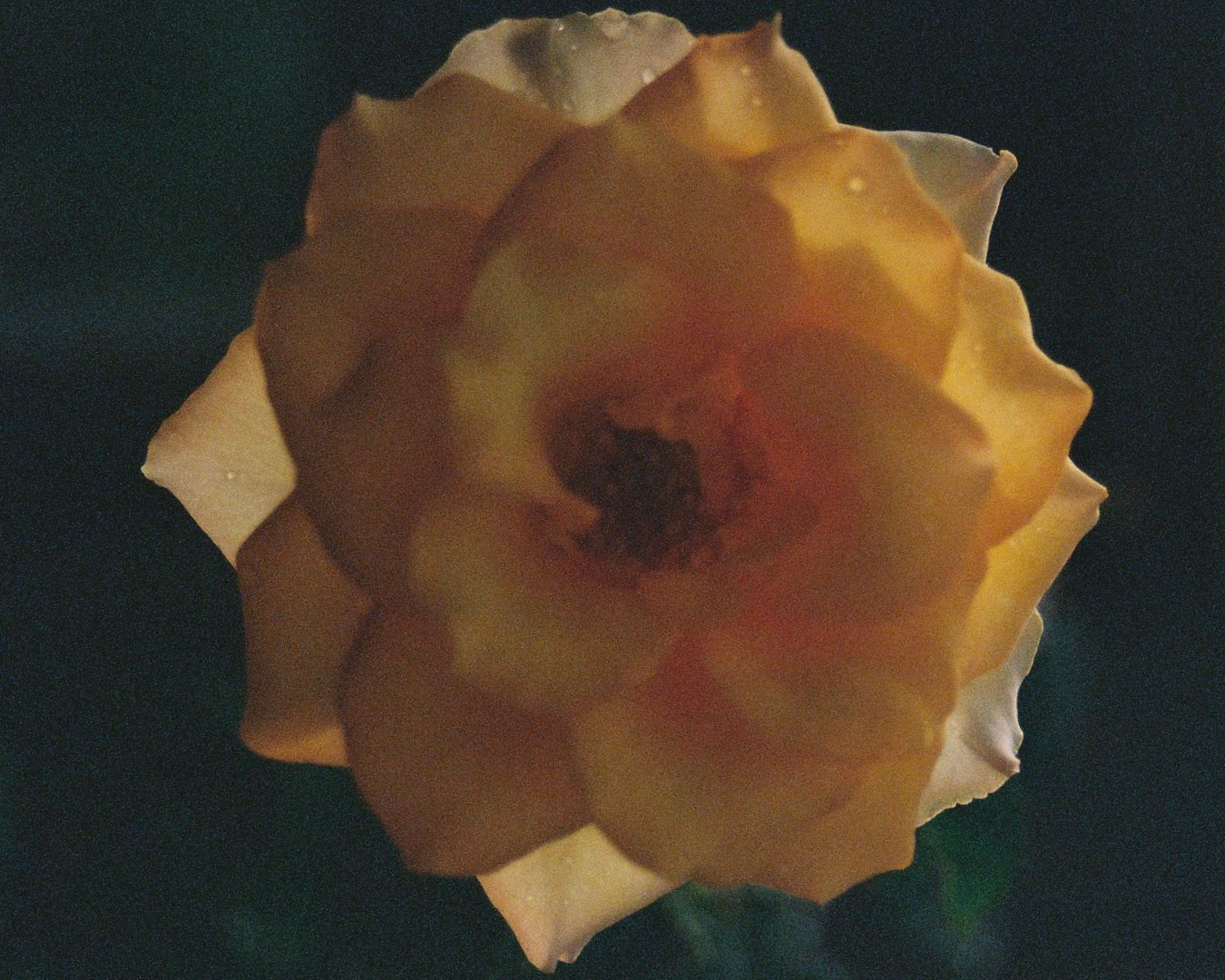
Rose Magic Moisturizer: Rose in Contemporary Formulation
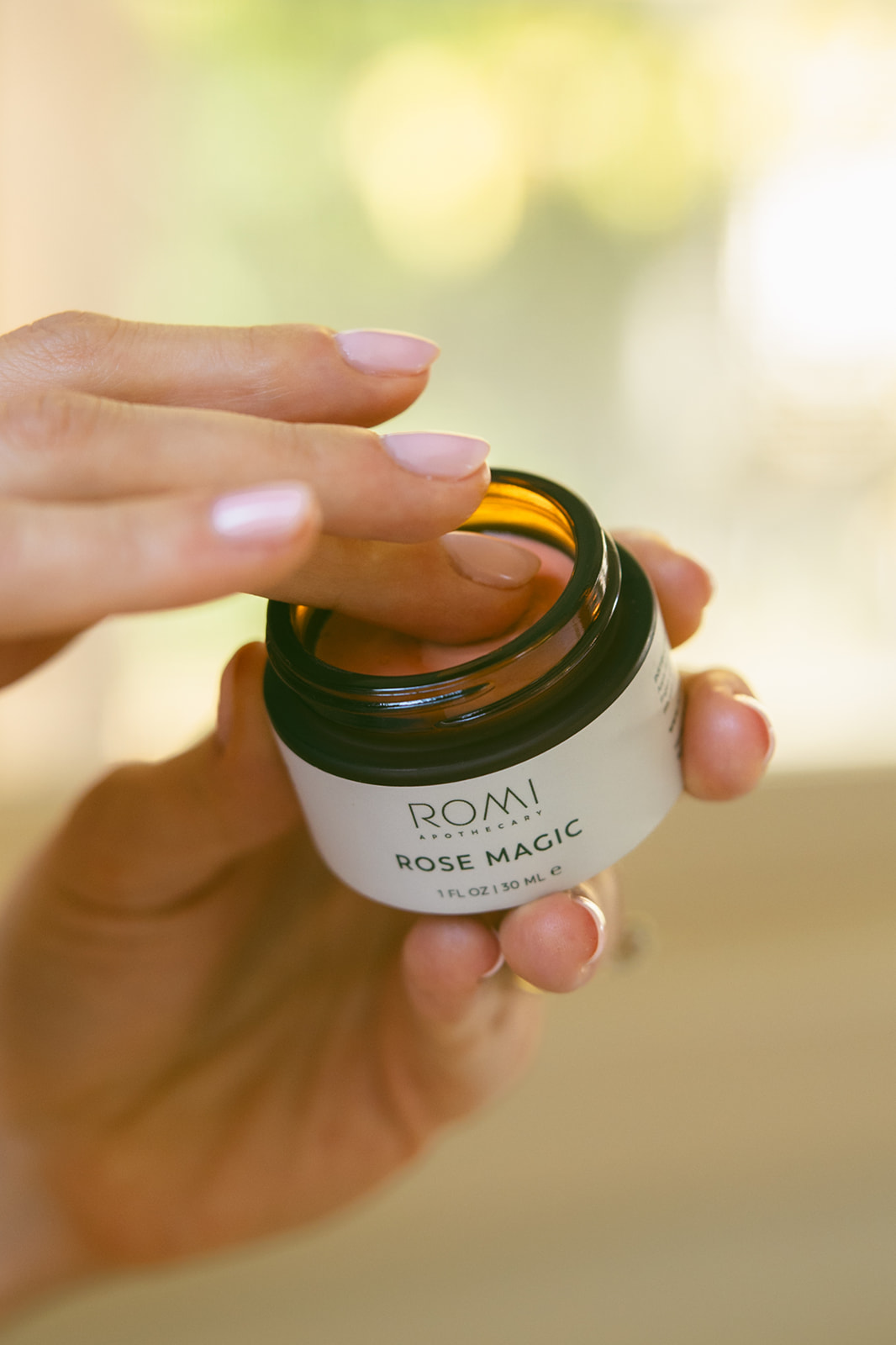
Understanding rose’s traditional uses and documented properties informed how we formulated Rose Magic Moisturizer.
The approach:
We wanted an everyday moisturizer that brought rose’s traditional benefits into consistent practice. Something light enough for daily use under makeup but rich enough to actually nourish. Something that worked with the skin’s natural function rather than against it.
The formula:
Rose distillate and rose geranium distillate create the hydrating base. These aren’t just fragrant waters – they’re therapeutic hydrosols carrying water-soluble compounds from the flowers.
Fresh aloe vera juice (not reconstituted powder) provides soothing hydration.
Grapeseed oil delivers lightweight moisture without clogging pores – important for a daytime moisturizer.
Rosehip seed oil brings its documented benefits: essential fatty acids and vitamins that support skin renewal.
Shea butter adds nourishing richness without heaviness.
Rose petals are infused into the oil phase, extracting their beneficial compounds directly into the formula.
Calendula (also infused) has been used historically in skin care for its soothing and renewal-supporting properties.
Rose damascena and rose geranium essential oils provide both therapeutic benefit and that characteristic rose scent – though it’s gentle, not overwhelming.
The result:
A silk-soft emulsion that absorbs quickly without greasiness. Hydrating without being heavy. Leaves skin feeling smooth, nourished, with what people describe as a healthy glow.
It’s formulated for normal to combination skin types – those who need real moisture but can’t handle heavy creams.
How to use it:
Apply after cleansing, toning, and any serums you use. Rose Magic works as your final moisturizing step, sealing in the hydration from products applied before it.
A small amount spreads easily – you’ll find your perfect quantity through experimentation.
Use it morning and evening, or choose one time of day based on your skin’s needs. Many people find it works beautifully both times.
The consistency of daily use matters more than the amount of product. Two minutes morning and evening with attention and care.
Rose Throughout the ROMI Line
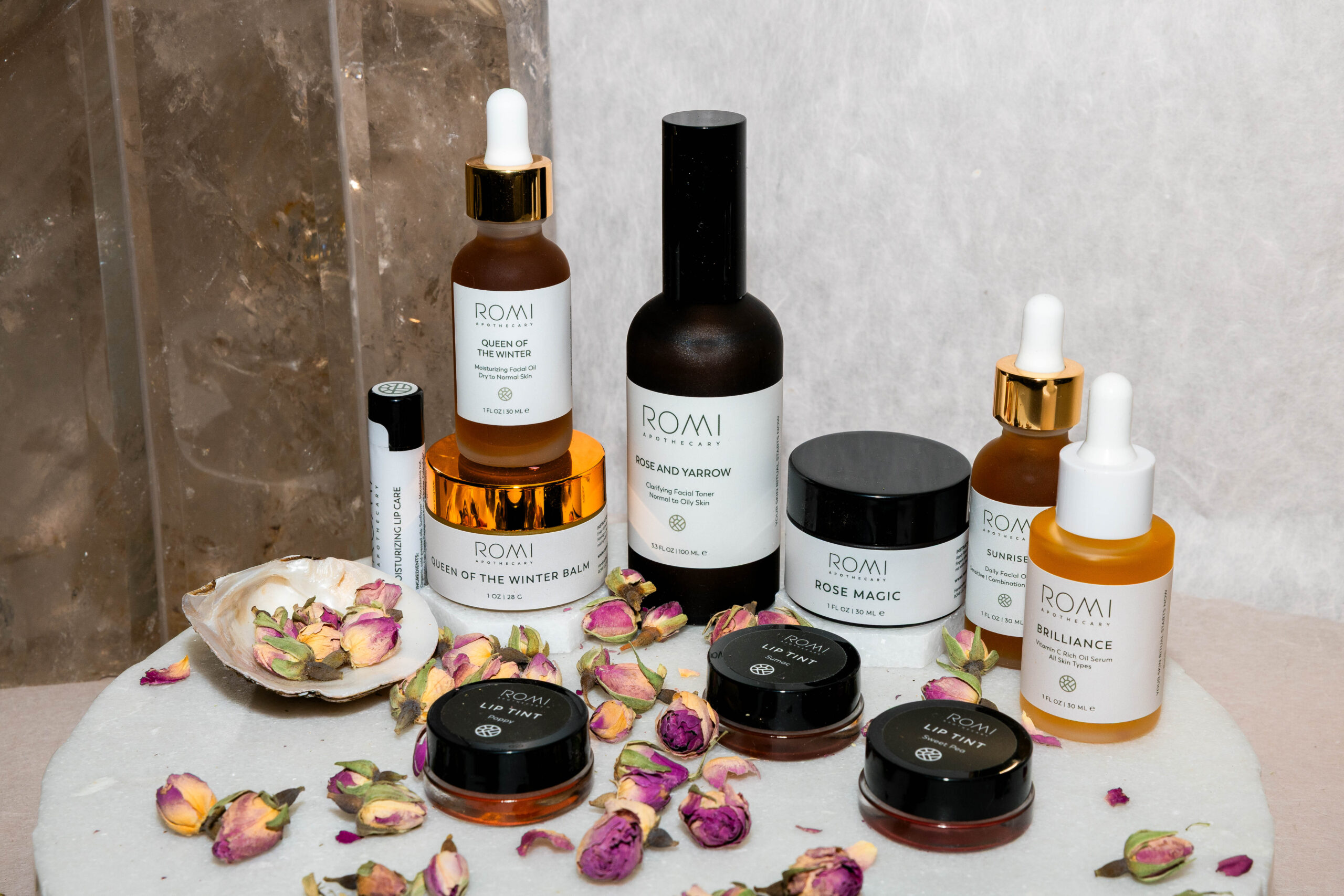
Rose shows up in multiple ROMI formulations because once you understand what it offers, you realize it enhances almost anything it touches.
Rose and Yarrow Toner
Rose hydrosol and rose petals form the heart of this toner. Rose hydrosol delivers hydration and gentle pH balancing. Rose petals (infused in witch hazel) bring their toning and refining properties.
This toner uses rose’s cooling, astringent nature exactly as traditional medicine systems described – to prep skin, refine pores, and create the optimal conditions for products applied afterward.
Queen of Winter Oil
This protective face oil begins with a full lunar cycle infusion of fresh herbs in organic jojoba oil. Rose petals are infused alongside lavender, elderflower, and helichrysum, then double-strained before being combined with protective seed oils rich in carotenoids.
Rose brings its soothing, cooling properties to this rich formula. While Queen of Winter is known for barrier protection in harsh conditions, rose is part of what makes it gentle enough for daily use despite its emollient richness.
Queen of Winter Balm
The solid version uses the same rose-infused base as the oil. Rose’s anti-inflammatory nature balances the protective richness, allowing the balm to soak in completely rather than sitting on the surface.
Brilliance Serum
This lightweight oil serum includes both rose-infused jojoba and rose otto essential oil. Rose adds its traditional skin-renewal-supporting properties to a formula already rich in antioxidants and vitamins.
The calendula-rose infusion creates a bright golden base that speaks to the sun-loving herbs it’s crafted from.
Lip Care
Rose-infused raw honey is the signature ingredient in this lip balm, creating that subtle honey-rose scent. Rose’s soothing, protective properties make it ideal for lips.
Combined with calendula, plantain, comfrey, and chickweed – all processed in-house – this balm uses the same herbalist’s approach as historical stillroom preparations: fresh local herbs, careful processing, rose as the beautiful heart of the formula.
Lip Tints (All Four Shades)
Every lip tint includes rose petal infusions in the base. These tints were conceived as “makeup as skincare” – color that also nourishes.
The rose infusion contributes to why these tints feel so gentle and forgiving on the lips. They’re buildable, blendable, and kind to the skin they touch.
Sunrise Oil
Even this formula for oily and sensitive skin includes rose in its herbal base. Rose’s toning, balancing nature benefits all skin types – its astringency helps oily skin while its gentleness works for sensitive types.
Rose appears throughout our line because we formulate as herbalists. We recognize what traditional medicine systems recognized: rose is versatile, gentle, effective, and enhances nearly any formula it enters.
The Story We Return To
There’s a tale from Persian literature – the story of Layla and Majnun, written by the 12th-century poet Nizami Ganjavi.
Majnun loved Layla, but circumstances kept them apart. In his longing, he wandered the desert calling her name, and everywhere his feet touched the ground, roses grew.
The story is often read as a tragedy. But there’s another reading:
Love leaves traces. Care creates beauty. Consistency matters more than circumstance.
This is what daily practice with rose teaches.
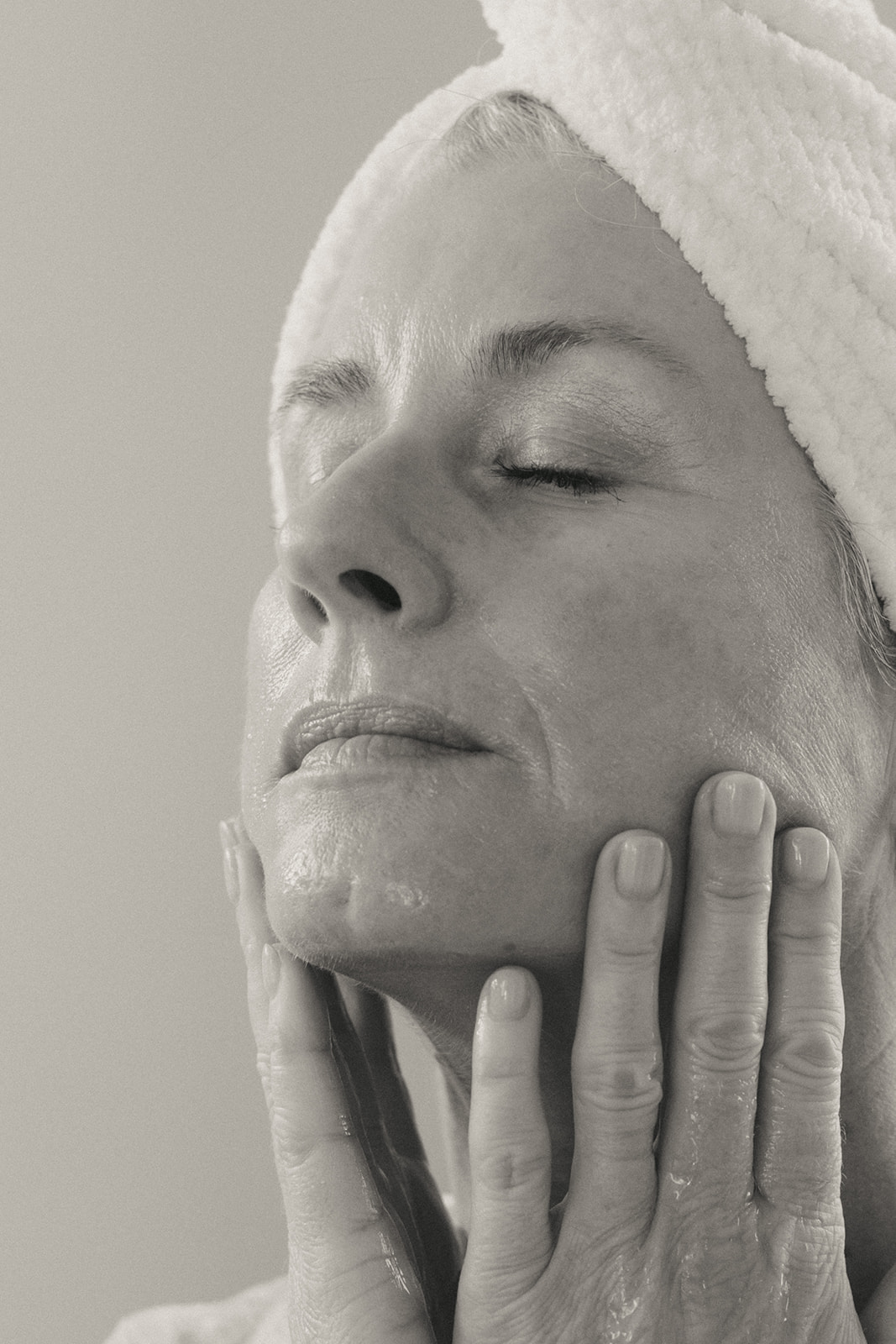
Not grand gestures. Not perfect conditions. Just showing up. Cleansing your face. Misting toner. Smoothing Rose Magic over your skin with gentle motions. Two minutes morning and evening.
The soft scent of rose. The silk texture. The accumulated effect of care repeated.
That’s what rose has been teaching humans for 5,000 years. Not through dramatic transformation, but through steady presence.
Rose as Practice
In traditional herbalism, there’s a concept called “plant allies” – herbs you work with consistently over time, building a relationship through repeated practice.
Rose is one of humanity’s oldest plant allies. Crossed cultures. Crossed centuries. Remained essential through every change in medical understanding because the fundamental observation never changed: rose works.
It cools inflammation. It gently tones. It soothes irritation. It supports the skin’s own healing. It makes the practice of care more beautiful.
That last part matters more than it might seem. When care involves something beautiful – something fragrant, something that’s been loved by humans for millennia – you slow down. You pay attention. You’re more likely to be consistent.
Rose invites presence. And presence is its own form of care.
This is why rose runs through ROMI’s formulations. Not as marketing. Not as fragrance for fragrance’s sake. As practical herbalism drawing on thousands of years of documented human use.
Working with rose today:
Start with Rose Magic as your daily moisturizer. Morning and evening. Consistent practice.
Add Rose and Yarrow Toner to prep your skin properly before moisturizing.
Use Queen of Winter Oil when your skin needs deeper nourishment or protection from harsh conditions.
Try Brilliance Serum when you want to support radiance and skin renewal.
Keep Lip Care accessible for consistent lip care throughout the day.
Each product offers a different way to work with rose. Each one draws on traditional knowledge while being formulated for contemporary use.
The practice is simple: show up consistently with products that work with your skin’s natural function, made with botanicals humans have trusted for thousands of years.
Rose has been part of human care for 5,000 documented years. It can be part of yours 
This Week and Beyond
This particular week holds Valentine’s Day – a cultural moment that emphasizes love and care.
However you choose to mark it (or not mark it), rose is here. Not as a holiday product. As a botanical that’s served human skin health across cultures and centuries.
Rose Magic for daily practice. Rose and Yarrow Toner for consistent prep. Queen of Winter Oil for deeper nourishment. Brilliance Serum for radiance. Lip Care for gentle protection.
Your relationship with your skin is the longest relationship you’ll have. Rose can be part of how you tend it – this week, and every week after.
xx, Romi Apothecary Team
Historical Sources Referenced:
Dioscorides, De Materia Medica (circa 50-70 CE) Pliny the Elder, Natural History (77-79 CE) Avicenna (Ibn Sina), The Canon of Medicine (Al-Qanun fi al-Tibb) (circa 1025 CE) Hildegard of Bingen, Physica (circa 1150 CE) Nizami Ganjavi, Layla and Majnun (1188 CE) Traditional Chinese Medicine classical texts Ayurvedic traditional texts and practices