


What Actually Creates Glowing Skin
Everyone wants it. That luminous, lit-from-within quality that makes people ask what you’re using, if you’re wearing highlighter, how your skin looks like that. The kind of radiance that appears effortless, natural, like you were born glowing.
Most people think glow is genetic – something you either have or don’t. Or that it requires expensive products, professional treatments, makeup to fake it. Or that it’s the result of one miracle serum that promises radiance in a bottle.
None of this is true.
Glow is specific. It’s the result of four things working together in sequence: exfoliation that clears the surface, hydration that plumps from within, vitamin C that supports healthy function, and light that reveals what you’ve built. When you understand what these actually do and how they interact, you can create glow through practice rather than chasing products that promise it but can’t deliver it alone.
This is the revelation most people never get: glow isn’t something you buy. It’s something you build.
The Myth of Glowing Skin
The beauty industry has sold glow as something external – a product you apply, a treatment you receive, a highlighter you blend. Buy this serum and wake up glowing. Get this facial and radiate for days. Use this illuminating primer and fake it until you make it.
But people who actually have the glow everyone wants – that genuine radiance that doesn’t wash off, that looks the same in harsh bathroom lighting as it does in filtered photos – aren’t using highlighter. They’re not blessed with special genetics. They’re not spending thousands on treatments.
They understand what glow actually is. And they practice building it.
Glow is light reflecting evenly off smooth, well-hydrated skin that’s supported by adequate vitamin C and revealed by natural light. That’s the whole thing. Not magic. Not mystery. Physics and biology working exactly as they should when you give your skin what it needs.

What Glow Actually Is: The Four Elements
Element One: Smooth Surface
Light behaves predictably. When it hits a smooth surface, it reflects evenly. When it hits a rough surface, it scatters in multiple directions. This is why polished metal shines and rough metal doesn’t, why calm water reflects and choppy water doesn’t.
Your skin follows the same principle.
Dead cells accumulate on your surface constantly – this is normal, this is your skin’s natural turnover process where old cells shed and new ones replace them. But when dead cells build up faster than they shed, when they stack unevenly or cluster in patches, they create rough texture. Light hitting this rough surface scatters instead of reflecting evenly. This scattering is what you see as dullness.
Exfoliation removes this buildup. Not by scrubbing away healthy skin, but by gently assisting the shedding of dead cells that are ready to release but haven’t detached yet. When your surface is smooth – when dead cell accumulation is minimal and even – light can reflect properly. This immediate brightness after exfoliation isn’t magic. It’s physics. You’ve removed what was scattering light, so now light bounces evenly off your skin’s surface.
This is the first element of glow. Without it, nothing else works as well. Hydration can’t penetrate properly through excessive dead cell buildup. Vitamin C can’t reach living tissue. Light has nothing smooth to reflect off of. Start here: clear the surface.
Element Two: Cellular Hydration
Your skin is approximately seventy percent water in its living layers. This water isn’t incidental. It’s structural. It maintains cell volume, supports all metabolic processes, creates the medium in which every skin function occurs.
When skin is adequately hydrated at the cellular level, cells are plump. They have proper volume. The tissue has dimension, presence, that quality of fullness that creates shadows and highlights naturally as light moves across your face. This dimensional quality – this sense of your skin having substance and life – is part of what people perceive as glow.
When skin is dehydrated, cells flatten. Fine lines become visible because the tissue has lost volume. Your face looks flat because there’s no dimensional play of light and shadow. The skin appears dull because dehydrated cells don’t interact with light the same way hydrated cells do.
Hydration comes from water delivered topically through toner and held by humectants in serums. This isn’t the same as drinking water – systemic hydration helps, but skin loses water constantly through evaporation from the surface, and topical hydration addresses this directly at the source.
When you layer toner on freshly exfoliated skin, when your surface is clear and receptive, that water penetrates into your dermal layers. Your cells absorb it. They plump. Your skin gains that dimensional quality, that fullness, that presence that’s essential to glow.
This is the second element. Smooth surface allows light to reflect evenly. Hydration gives your skin the fullness and dimension that creates natural shadow and highlight. Together they start building what people recognize as radiance.
Element Three: Vitamin C Support
Vitamin C does specific things at your skin’s surface level. It supports collagen production – the protein that gives skin its structure and firmness. It helps even skin tone by interfering with melanin production in areas of hyperpigmentation. It provides antioxidant protection against environmental stressors including UV exposure.
But vitamin C is notoriously unstable in skincare. Water-based vitamin C serums oxidize rapidly when exposed to air and light, turning brown and losing potency often before you’ve finished the bottle. The ascorbic acid that was supposed to benefit your skin has degraded into compounds that don’t do much of anything.
Oil-based vitamin C sidesteps this problem. Vitamin C naturally present in seed oils – cucumber seed, black currant seed, passionfruit seed, rosehip, pomegranate – remains stable because it’s in its whole-plant form, surrounded by the other compounds that naturally occur with it. These oils don’t oxidize the way water-based ascorbic acid does. The vitamin C stays potent.
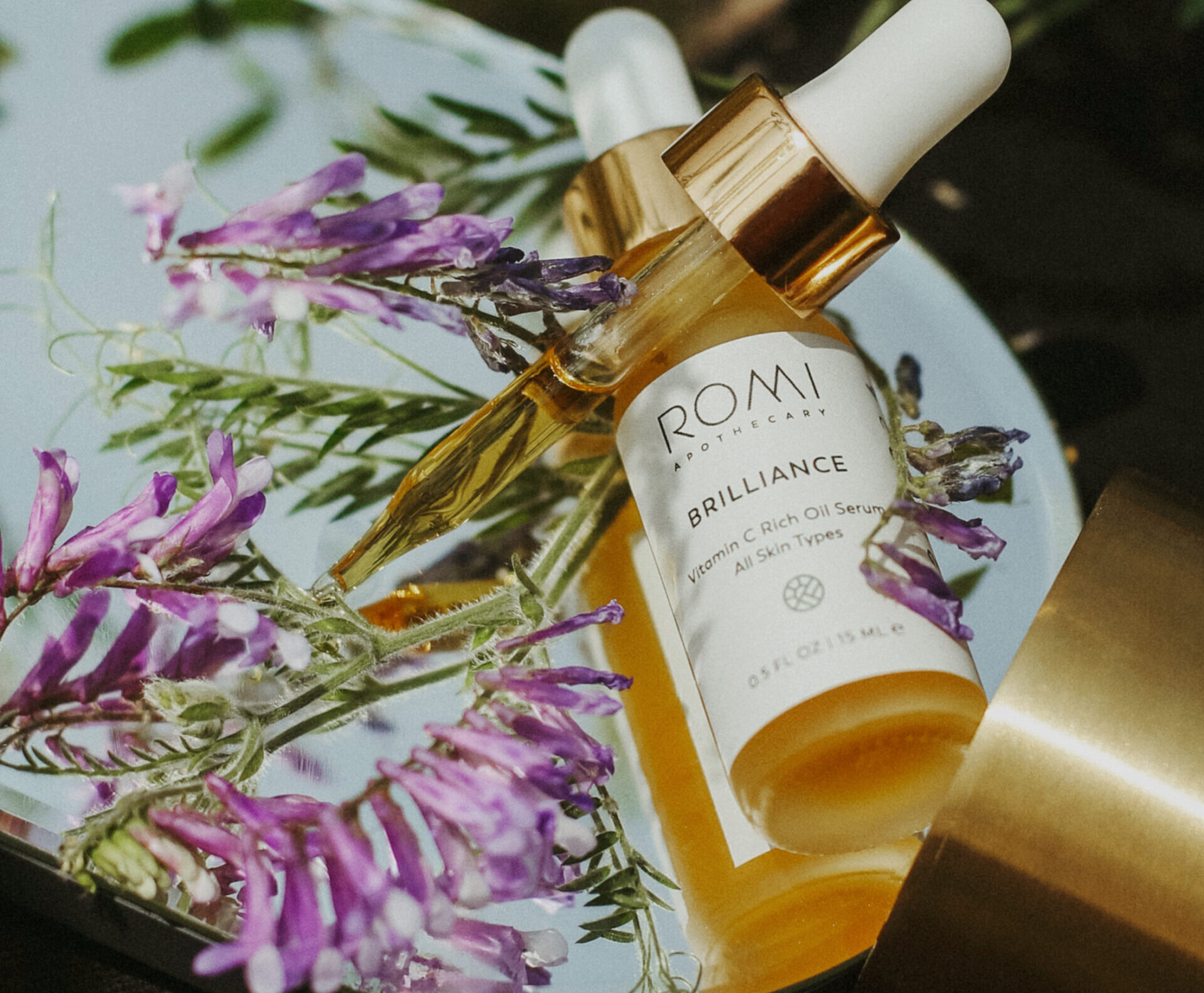
Brilliance Serum delivers vitamin C this way. The seed oils provide not just vitamin C but also essential fatty acids, vitamin E, and various plant compounds that work together. The calendula-infused jojoba base (fresh organic calendula flowers infused for a full lunar cycle) creates the golden color and adds its own skin-supporting properties. Rose-infused jojoba and rose otto essential oil, frankincense, lavender, carrot seed, and vetiver complete the formula.
When you apply this to clean, hydrated skin – when you’ve exfoliated so there’s no barrier of dead cells, when you’ve toned so your skin is receptive – the vitamin C-rich oils penetrate readily. They work at the surface level, supporting collagen, evening tone, and protecting against oxidative stress from increasing UV exposure as spring brings longer, brighter days.
This is the third element. Not a miracle ingredient, but a specific compound doing specific work that contributes to the overall result you’re building.
Element Four: Light Itself
Glow doesn’t exist without light. You can have smooth exfoliated skin, excellent hydration, ample vitamin C – but if there’s no light to interact with your skin, there’s no visible glow.
This is why people say their skin looks better in natural light than in harsh fluorescent lighting. Natural light – especially the soft diffused light of morning or the golden light of late afternoon – interacts with skin in ways that reveal its best qualities. The dimensional play of your well-hydrated skin, the even reflection off your smooth surface, the healthy tone supported by vitamin C – all of this shows in good light.
Spring brings more light. Longer days mean more exposure. More UV means your skin needs more antioxidant protection (vitamin C provides this). The light that was scarce through winter returns, and the glow you’ve been building through exfoliation and hydration and vitamin C finally has the light it needs to be visible.
This is why spring is when people start noticing glow. Not because spring creates it, but because spring’s returning light reveals what you’ve built through the darker months or what you’re building now as conditions improve.
Why These Four Together
Each element supports the others. Exfoliation without hydration leaves skin feeling tight and stripped – you’ve removed dead cells but haven’t given your skin the water it needs to plump and function well. Hydration without exfoliation can’t penetrate properly through excessive dead cell buildup – the water sits on the surface instead of reaching dermal layers. Vitamin C applied to skin that’s not properly prepared (not exfoliated, not hydrated) can’t do its work effectively because it can’t reach where it needs to work.
And none of it shows without light to reveal it.
But all four together – smooth surface, cellular hydration, vitamin C support, natural light – create conditions for genuine glow. Not the temporary brightness of highlighter that washes off. Not the filtered glow of photo editing. Actual radiance from skin that’s functioning well, that has what it needs, that can interact with light the way healthy skin does.
This is what people with glowing skin understand. They’re not doing one thing. They’re consistently doing four things in sequence, building the layers that create radiance.
The Practice: Building Glow Weekly
Understanding what creates glow means you can build it through practice. Here’s how the four elements translate into actual routine:
Once Weekly: Exfoliation
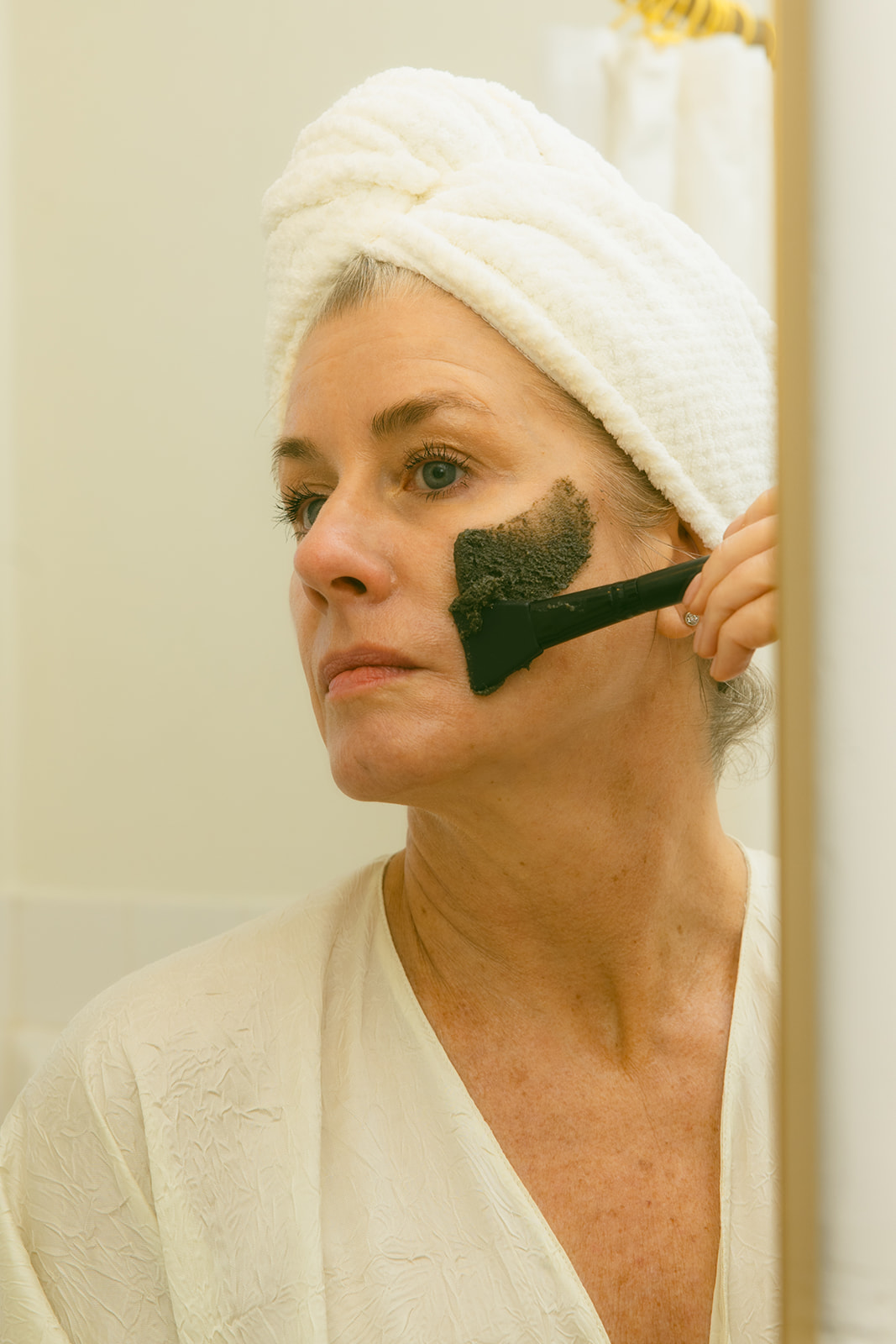
Use Ma’ema’e Face Polish to clear your surface. This ultra-fine botanical polish – kaolin clay, triple-milled herbs (lavender, rose, oat, rice bran), Hawaiian botanicals (moringa, spirulina, hibiscus, matcha), raw honey, perilla seed oil, castor oil – removes dead cell buildup without abrasion.
Mix with water or hydrosol until it moves like syrup. Massage gently for 2-3 minutes. The ultra-fine particles lift dead cells while the oils create slip so nothing drags or scratches. Rinse thoroughly.
Your surface is smooth now. Light can reflect evenly. You’ve created the foundation for everything that follows.
Immediately After: Hydration
Your freshly exfoliated skin is maximally receptive right now. This is when toner works most effectively – when there’s no barrier of dead cells blocking penetration, when your skin can accept and hold water readily.
Layer your toner – Rose and Yarrow, Elderflower, Lunaire, or Solaire depending on what your skin needs. If the first application absorbs instantly, apply more. Keep layering until your skin feels satisfied, until water sits on the surface for a moment before absorbing instead of disappearing immediately.
This hydration plumps your cells, creates dimensional fullness, prepares your skin to receive the concentrated treatment that comes next.
Then: Vitamin C
Apply Brilliance Serum to this clean, hydrated surface. 2-4 drops pressed between your palms, pressed onto your face.
The vitamin C-rich seed oils – cucumber seed, black currant seed, passionfruit seed, rosehip, pomegranate – absorb readily into skin you’ve prepared to receive them. The calendula-infused jojoba base, the rose and frankincense and lavender – everything penetrates because you’ve done the work of clearing surface buildup and providing adequate hydration.
This serum supports the collagen production, tone evening, and antioxidant protection your skin needs especially as UV exposure increases with lengthening spring days.

Finally: Seal
Apply your facial oil – Queen of Winter, Sunrise, whichever you’re using – to seal everything you’ve just layered. Oil on well-hydrated, vitamin C-treated skin absorbs readily and feels light. It creates occlusion that prevents the water you delivered from evaporating back into the air.
This complete sequence – exfoliate, hydrate, vitamin C, seal – done once weekly with attention and presence, builds the conditions for glow. Not instantly. Not dramatically. But consistently, cumulatively, genuinely.
Daily Maintenance: Supporting What You Built
Between weekly exfoliation sessions, maintain what you’ve created:
Morning and evening: tone and seal. Your toner delivers ongoing hydration. Your oil creates ongoing protection. Even without exfoliation or concentrated vitamin C every day, this basic layering – water first, oil to seal – maintains baseline hydration and protection.
Use Brilliance daily or every other day if your skin wants that consistent vitamin C support. On skin that’s adequately hydrated, that you’re exfoliating weekly to keep surface clear, Brilliance works steadily to support tone, protect against environmental stress, contribute to the radiance you’re building.
Pay attention to light. Notice how your skin looks in morning light, in afternoon sun, in evening’s softer glow. The glow you’re building becomes visible in natural light. This isn’t vanity – it’s observation. You’re watching your skin respond to the practice, seeing the results of consistent care.
What to Expect
This isn’t instant transformation. This is cumulative building.
After your first exfoliation and full sequence: Your skin is noticeably brighter. That immediate brightness is dead cell removal allowing light to reflect properly. It’s real, but it’s just the beginning.
After two weeks of weekly practice: The brightness lasts longer between exfoliation sessions. Your skin maintains better hydration. You start seeing subtle evening of tone as vitamin C works consistently.
After a month: People start commenting. Not “you’re wearing something different” but “you look good, what are you doing?” The glow is becoming visible – your skin is smooth more consistently, hydrated more deeply, supported by regular vitamin C, revealed by spring’s increasing light.
After two months, three months, ongoing: This becomes your baseline. This is what your skin looks like when it has what it needs. Smooth surface, adequate hydration, vitamin C support, natural light revealing it all. The glow people notice isn’t makeup. It’s your skin functioning well.
This is the revelation: glow isn’t something you’re born with or without. It’s something you build through understanding what it actually is and practicing the layers that create it.
Why This Matters
The beauty industry profits from keeping glow mysterious. If you think it’s genetic, you’ll buy products hoping to overcome your genetics. If you think it’s one miracle ingredient, you’ll keep chasing the next promised miracle. If you think it’s impossible without professional treatments, you’ll spend money trying to buy results you could build yourself.
But when you understand that glow is specific – smooth surface, hydration, vitamin C, light – you can create it. Not through expensive products or professional treatments, though quality products help. Through practice. Through showing up weekly to exfoliate. Through layering water daily. Through consistent vitamin C. Through letting light reveal what you’re building.
Ma’ema’e clears the surface. Your toner hydrates. Brilliance delivers stable vitamin C. Your oil seals. Spring light reveals. Four elements working together, none of them magic, all of them practical.
This is how you build glow. Not by chasing it. By understanding what it is and creating the conditions for it to exist.
Your skin has always been capable of this. You just needed to know what to do ✨
xx, The ROMI Apothecary Team
Related Reading:
- Water for Your Skin – The Complete Guide to Toners
- Surface Renewal – The Complete Guide to Gentle Exfoliation for Late Winter
- Reading the Signs – Your Skin in Seasonal Transition
Products featured in this article: