

How to Improve Skin Texture Naturally (And the Serum That Actually Helps)
Trying to improve skin texture? Uneven skin texture is one of the most common things people want to change about their skin, and one of the most misunderstood. Most people reach for a new product when their skin feels rough or dull, try it for a week or two, don’t see dramatic results, and move on to the next thing. The cycle repeats. The texture doesn’t change.
The reason this happens isn’t usually the products. It’s the approach. Skin texture responds to practice, not products, and understanding what texture actually is makes it much easier to know how to improve skin texture.
What Skin Texture Actually Is (And Why It Gets Uneven)
Texture is the surface quality of your skin. When it’s smooth, light reflects evenly across the surface, and skin looks clear, radiant, and alive. When it’s uneven, rough, or congested, light scatters instead of reflecting, and skin looks dull and tired regardless of what you’re putting on it.
What most people think of as a texture problem is usually one of two things, or both at once. There’s surface congestion, the accumulation of dead skin cells that haven’t shed naturally, sitting on the surface and creating roughness, dullness, and uneven tone. And there’s undernourished skin, the layers underneath the surface that aren’t getting sufficient fatty acids, vitamins, and botanical compounds to renew themselves efficiently.
These two issues reinforce each other. When the surface is congested, nourishing products can’t absorb properly, so the skin underneath stays undernourished. When the skin underneath is undernourished, new skin cells arrive at the surface in poor condition, adding to the congestion. Breaking the cycle requires addressing both things consistently and over time.
Texture and tone are closely related but not the same thing. Texture refers to the physical surface quality of skin, its smoothness, roughness, and pore appearance. Tone refers to the evenness of skin color and the distribution of pigment across the surface. They often improve together because they share root causes, but they’re worth understanding separately.
What Causes Uneven Skin Texture
Skin texture is disrupted by a surprisingly short list of things, most of which are seasonal, environmental, or habitual rather than anything fundamentally wrong with your skin.
Seasonal transitions are one of the most common triggers. In winter, cold air and indoor heating create a dehydrating environment that slows skin’s natural cell turnover and leads to buildup on the surface. The barrier thickens slightly as a protective response. As temperatures rise and humidity increases in spring, the skin starts to shift back, but that transition period often produces visible texture changes as the old surface clears and new skin comes through.
Inconsistent or insufficient moisture is another major factor. When skin is chronically under-moisturized, the surface becomes rough and uneven as cells lose their natural suppleness. This isn’t always about drinking more water. It’s about whether your skin’s barrier is intact enough to hold moisture in, and whether you’re giving the layers underneath the fatty acids they need to stay supple.
Over-exfoliation is worth mentioning because it’s counterintuitive. More exfoliation does not produce smoother skin. Too-frequent exfoliation compromises the skin barrier, increases sensitivity, and actually makes skin texture worse over time. Once or twice a week is almost always sufficient, and gentler methods outperform harsh ones consistently.
Finally, insufficient nourishment. A skincare routine that focuses only on cleansing and moisturizing without delivering concentrated botanical nutrition to the skin leaves the renewal process without raw material to work with. Fatty acids, vitamins, and plant compounds are what the skin uses to build new cells. Without them, the new skin that comes to the surface is thinner, less resilient, and more prone to uneven texture.
How to Improve Skin Texture: A Two-Step Botanical Approach
To improve skin texture naturally comes down to two consistent practices. Clearing the surface regularly and feeding the skin underneath daily.
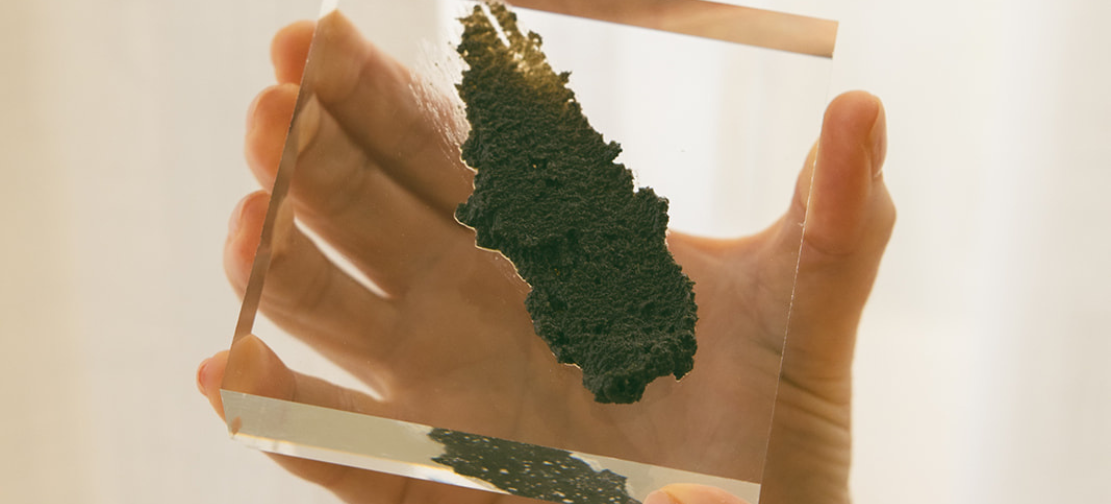
The clearing part is exfoliation, but done thoughtfully. Once or twice a week, a gentle botanical exfoliant removes the dead cell buildup that’s creating surface roughness and preventing your other products from absorbing properly. Ma’ema’e Exfoliating Face Polish was formulated for exactly this. Kaolin clay draws out impurities and refines the surface. Finely milled lavender, oat, and rose smooth without abrading. Moringa and spirulina deliver concentrated plant nutrients at the moment the surface is most open to receiving them. The result is skin that feels genuinely clean and smooth, not stripped or tight.
The feeding part is where most people underinvest. A concentrated botanical serum used daily gives skin the fatty acids, vitamins, and plant compounds it needs to renew itself well. This isn’t about immediate visible results to improve skin texture. It’s about giving the renewal process what it needs so that the skin arriving at the surface four weeks from now is in better condition than what’s there today. That’s how texture actually changes, not overnight, but cycle by cycle, with consistent support.
These two practices work synergistically. Exfoliation clears the path. Daily nourishment gives the new skin coming up something to work with. Together they address both root causes of uneven texture, and together they produce results that neither achieves alone.
Restore Serum: Seven Botanicals That Support Skin Renewal
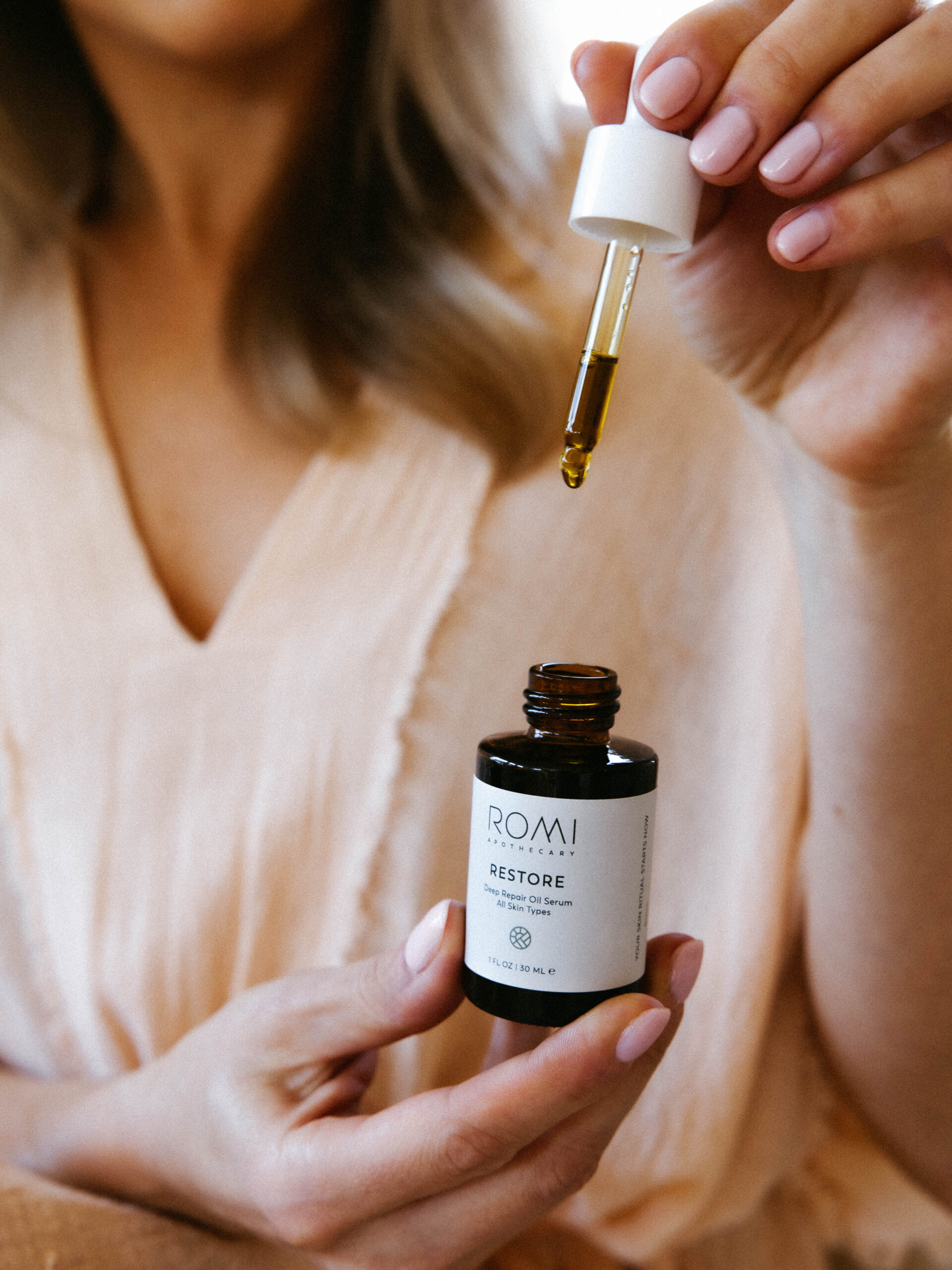
Restore Serum was formulated as the daily nourishment step, and its formula is worth understanding ingredient by ingredient because every element is specific and intentional.
The base is tamanu oil, known in Hawai’i as kamani, a cold-pressed oil from the fruit kernels of the Calophyllum Inophyllum tree. The kernels are dried in the sun for weeks before pressing, a slow process that produces a thick, golden brown oil rich in fatty acids and deeply absorbed by skin. Tamanu has been used in Polynesian tradition for centuries for its affinity with skin, and as a carrier oil it carries everything else in the formula deeper.
Into that base, seven herbs grown by our farmer friends and hand-processed in our apothecary are infused into jojoba oil. Yarrow, comfrey, plantain, nettle, ashwagandha root, chamomile, and St. John’s Wort. Each one is present for a reason.
Yarrow has a long history in botanical skincare for skin that needs support and toning. Comfrey is one of the most traditionally valued herbs for the skin, rich in allantoin, a compound recognized for its affinity with skin cell renewal. Plantain, the common garden herb rather than the banana variety, is one of the most quietly effective botanicals in the herbalist’s toolkit, deeply soothing and supportive for skin that is stressed or sensitive. Nettle brings its remarkable nutrient density, rich in minerals and vitamins that feed the skin from the outside in. Ashwagandha root is an adaptogenic herb that contributes to the formula’s distinctive earthy, slightly musky scent as well as its nutritive quality. Chamomile calms and soothes, making this formula appropriate for sensitive and reactive skin types. St. John’s Wort, harvested at peak potency, completes the seven with a long tradition of use for skin that has been exposed to environmental stress.
Beyond the herb infusion, rosehip seed oil brings essential fatty acids and vitamins that support the skin’s natural cell turnover process. Sea buckthorn, one of the most nutrient-dense botanicals used in skincare, contributes vitamins C and E alongside a remarkable array of carotenoids. Helichrysum, an “everlasting”* flower with a long tradition in botanical skincare, adds its gentle and specific properties. Carrot seed oil rounds out the formula with beta carotene and antioxidants.
The result smells herbaceous and slightly sweet, with a hint of musk from the fresh ashwagandha root. It absorbs quickly and completely. And it smells, genuinely, like something is working.
How to use it: three to five drops on slightly damp skin after toning, every day. On the days you exfoliate with Ma’ema’e first, you’ll feel the difference in how deeply it absorbs.

The Part That Takes Patience to Improve Skin Texture
Skin texture doesn’t change overnight. Your skin’s natural renewal cycle takes roughly four weeks, which means the nourishment you provide today shows up in your skin a month from now. This timeline is frustrating when you want immediate results, but it’s also clarifying. It tells you that consistency matters far more than intensity.
Two minutes every morning and evening. A weekly exfoliation ritual with Ma’ema’e. A daily serum that gives your skin what it needs to do its own work. That’s the whole practice. It doesn’t require a ten-step routine or a cabinet full of products. It requires showing up regularly with the right things.
The people who see the most significant improvement in skin texture are almost never the ones who have tried the most products. They’re the ones who found a simple practice and stuck with it long enough to see their skin’s renewal cycle complete.
Restore Serum is available in two sizes. The 0.5 oz is a perfect starting point.🌿